Labradoodle
AKA — Labrapoo, Labradorpoo
A Social Athlete in a Complicated Coat
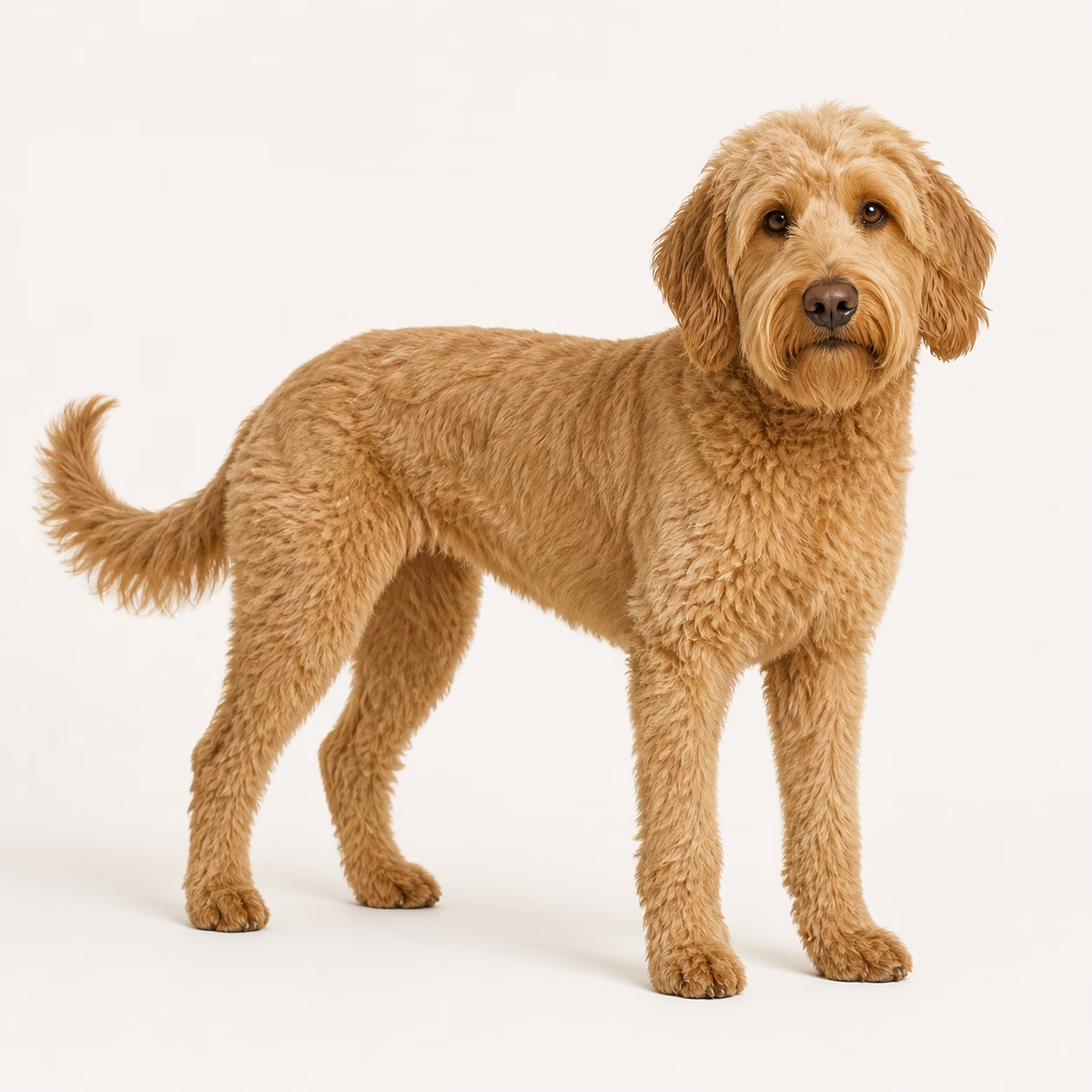
Labradoodles combine two smart, athletic retrievers. Many are terrific family dogs, but coat, shedding, size, and intensity are not standardized by the name alone.
Breed traits at a glance
Most Labradoodles are active companions. Daily movement, retrieving, sniffing, and training make it much easier for them to relax indoors.
Both parent breeds tend to learn quickly and work well with people. Labradoodles also notice every accidental reward, so consistent household rules pay off.
Many are cheerful family dogs. Puppies can be mouthy, and full-grown standards may bowl over small children until calm greetings are taught.
Wavy and curly coats trap loose hair and mat easily. Expect line brushing, comb checks, regular clipping, and professional grooming throughout the year.
Boredom, excitement, and visitors can all set off barking. Enough activity and a familiar settle routine help keep it manageable.
Some individuals shed lightly, but no cross can guarantee allergy compatibility. Spend time with the actual dog before committing.
The honest fit check
Is a Labradoodle right for you?
A Labradoodle can be a funny, trainable family athlete. Make sure the exercise, grooming, and coat uncertainty appeal to you as much as the friendly face.
Great fit if…
- You want an outgoing dog who can join walks, trips, games, and training.
- You enjoy teaching and can give a smart adolescent clear household structure.
- You can brush thoroughly and maintain a professional grooming schedule.
- You can choose a breeder by health records and temperament, not coat color.
Think twice if…
- You need a predictable low-shedding coat or a guaranteed allergy-safe dog.
- You want a low-energy companion who is satisfied with brief bathroom walks.
- Your dog would be alone most of the day without an exercise plan.
- You are choosing entirely from a photo without meeting adult relatives.
Daily reality
- Exercise
- A substantial daily outing, with retrieving, training, and room to run where safe.
- Shedding
- Anything from light to noticeable, depending on coat and generation.
- Alone time
- Usually social; teach alone time gradually so company does not become a constant requirement.
- Grooming
- Comb to the skin several times weekly; clip about every 6 to 8 weeks.
- Size
- Roughly 15 to 80 lb and 14 to 25 in, depending on Poodle parent and line.
Temperament & Personality
The original Labradoodle was developed in Australia when a guide-dog program crossed a Labrador Retriever with a Poodle in hopes of producing a working dog for a household dealing with allergies. Today, the name covers several related but distinct pedigrees: first-generation Labrador-Poodle crosses, later-generation Labradoodles, and multigenerational Australian Labradoodles. Australian lines may also include English or American Cocker Spaniel ancestry, so ask what is actually behind the dog.
Labradors and Poodles were both developed as athletic water retrievers. Their descendants are often social, clever dogs with plenty of enthusiasm for people, food, toys, and movement. Many learn quickly—and are equally quick to notice that jumping earns attention, counters hold food, and a bored human can usually be recruited for a game.
Size depends heavily on the Poodle ancestry and the breeding program. Australian Labradoodle standards describe miniature, medium, and standard ranges, while generic Labrador-Poodle crosses may fall outside them. Coats can be straight, wavy, or curly. Shedding ranges from light to quite noticeable, and a puppy photo cannot tell you whether someone with allergies will tolerate the adult dog.
A well-bred Labradoodle should be stable, athletic, and comfortable around people. That steadiness starts with thoughtful parent selection and early development, then grows through training.
What It's Like To Own One
Living with a Labradoodle is busy, cheerful, and often a little damp. Many want to carry something, follow someone, investigate the nearest water, and check whether the kitchen rules have changed since breakfast. They tend to insert themselves into family life quickly—not as quiet observers, but as enthusiastic participants.
Adolescence is where the work shows up. A standard-sized dog may be tall enough to reach the counter, strong enough to tow an unprepared walker, and friendly enough to greet every visitor at full speed. Retrieving, sniffing, short training sessions, and deliberate downtime give that energy somewhere useful to go. Exercise takes the edge off, but the real goal is a dog who can relax when the fun is over.
Then there is the coat. Some Labradoodles shed lightly; others leave far more hair than their buyers expected. Soft, furnished coats can hide mats beneath an apparently fluffy surface, especially behind the ears and wherever a collar or harness rubs. Brushing to the skin and keeping regular grooming appointments are comfort care, not cosmetic extras.
Handle those basics and the appeal becomes obvious: an affectionate, funny dog who is ready for an outing, delighted by a job, and happiest when ordinary family life includes them.
I am:Hugh Jackman
Athletic, warm, quick to connect, unmistakably Australian, and able to work hard without losing the friendly charm.
Famous & Fictional Owners
People and characters whose lifestyle, energy, and identity fit this breed.
Chris Hemsworth
An outdoors-first family life with room for training, swimming, and daily movement fits the athletic side of the cross.
Matthew McConaughey
Social, relaxed in presentation, active in practice, and happiest with a dog who can come along for the whole day.
Jennifer Aniston
Consistent, active, polished, and prepared to maintain both the training routine and the coat.
Dating Profile
I am smart, social, and ready to retrieve the same object until your throwing arm files a complaint. I enjoy water, snacks, training, and joining every plan. My coat may look effortless, but it needs brushing and regular grooming appointments. Teach me how to greet people without launching, give me something useful to do, and I will bring the charm, the wet beard, and a suspicious ability to find food anywhere.
Where They Want To Live
Labradoodles fit best with active people who want the dog involved in daily life. A house and yard can be helpful for a standard, but access to activity and training matters more than the mailing address. Smaller dogs can live well in apartments when barking, exercise, and grooming are part of the routine.
Long days alone followed by exhausted evenings are a difficult fit for many Labradoodles. Day care can help, but it cannot replace a relationship with their people, clear routines, and practice resting without constant entertainment.
Things To Know
- Labradoodle and Australian Labradoodle are not interchangeable pedigree terms
- A furnished face does not prove that the adult coat will shed lightly
- Adolescence can bring a large, physical, mouthy dog who is still learning to settle
- Both Labrador and Poodle health testing should be visible and verifiable
- Regular clipping does not replace brushing between appointments
Gear Guide
- Long-pin slicker brush and sturdy metal comb
- Retrieving bumpers and durable floating toys
- Washable settle mat for home and travel
- Front-clip harness while leash skills are developing
- Food puzzles for busy retriever brains
Health Watch: Common Breed Risks
Labradoodles can inherit conditions seen in Labradors or Poodles. Recent research does not support treating designer crosses as automatically healthier than their parent breeds.
- Hip and elbow dysplasia
- Progressive retinal atrophy and other inherited eye disease
- Exercise-induced collapse in relevant Labrador lines
- Von Willebrand disease and other Poodle-line DNA risks
- Addison's disease
- Ear infections, allergies, and skin problems beneath dense coats
Coat, Shedding & Grooming Needs
A Labradoodle may have a straighter hair coat, a wavy fleece coat, or a curlier wool coat. Each comes with a different shedding and matting pattern.
- Brush in lines from the skin outward several times each week
- Follow with a metal comb, especially behind ears and at friction points
- Plan on professional clipping about every 6 to 8 weeks
- Dry the ears and dense coat after swimming
- Expect coat changes as the soft puppy coat gives way to the adult coat
Diet & Nutrition Needs
Many Labradoodles inherit a Labrador-sized appetite even when their adult build is still a question mark. Base portions on the dog in front of you.
- Choose a complete and balanced food for the dog's growth stage and expected size
- Measure meals and monitor body condition every few weeks
- Use part of the daily food allowance for training
- Keep growing standards lean to reduce stress on joints
- Discuss repeated digestive or skin symptoms with a veterinarian instead of cycling foods blindly
Health Care Tips
Good breeder research starts with records. Ask what kind of Labradoodle is being bred, which breeds appear in the pedigree, and what testing was completed on both sides.
- Verify hip, elbow, eye, and relevant genetic results in a public database
- Check ears after swimming and keep canal hair managed without over-plucking
- Teach cooperative grooming before the adult coat arrives
- Protect growing joints from repetitive high-impact exercise
- Maintain a lean waist despite the dog's excellent negotiation skills
This breed is especially well-suited for:
Related Breeds
 L
L Labrador Retriever
America's favorite fetch-obsessed family dog.
Learn more → M
M Poodle
Elegance Meets Brains
Learn more →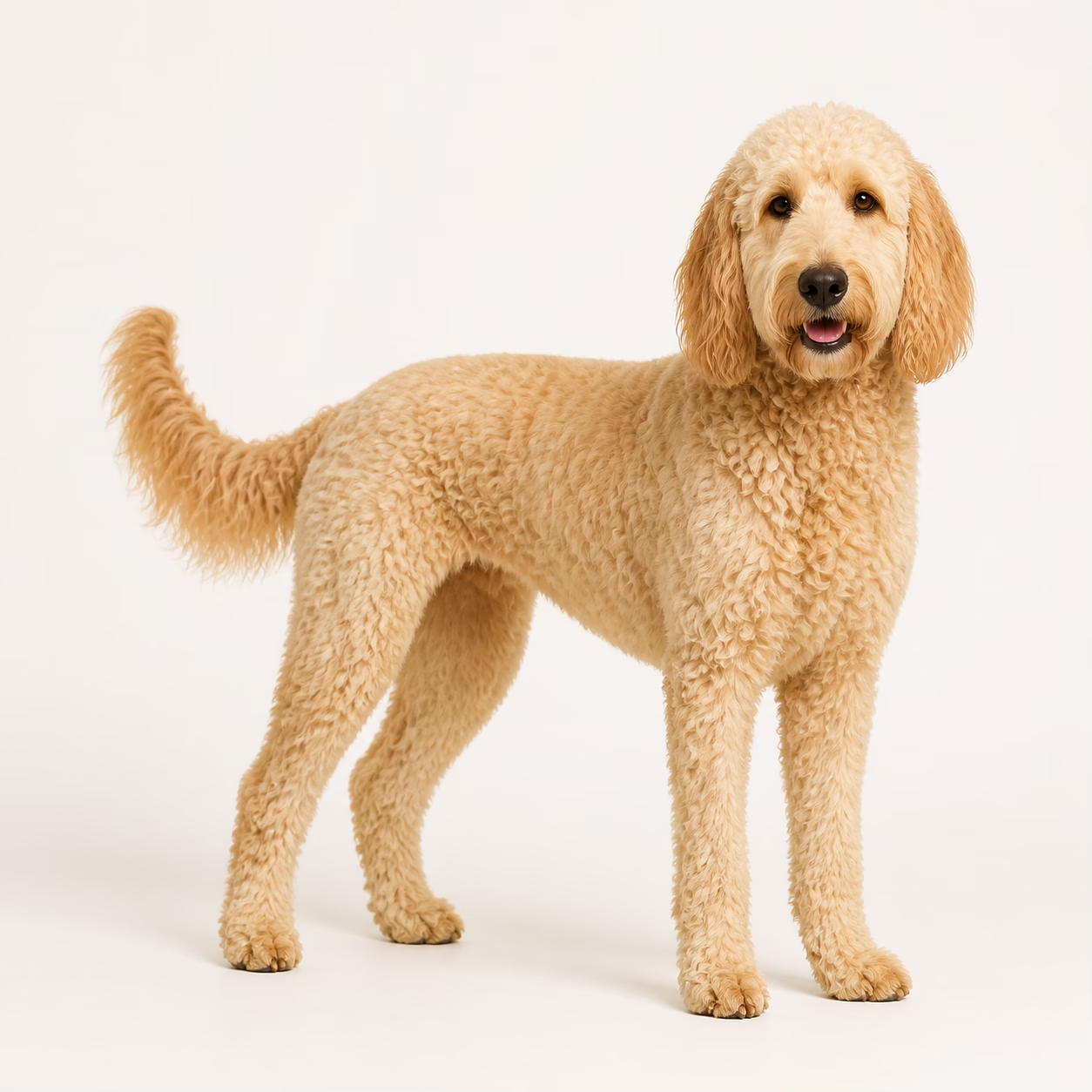 M
M Goldendoodle
The Family Favorite With a Grooming Schedule
Learn more → S
S Cockapoo
The Classic Companion Dog
Learn more → M
M Schnoodle
The Best of Both Worlds
Learn more → M
M Portuguese Water Dog
Curly-Coated Athlete
Learn more →Labradoodles can be bright, social, athletic dogs who fit active family life beautifully. The name alone cannot promise a particular coat, size, or temperament. Look past color and generation shorthand, meet adult relatives when possible, and choose a breeder who can show you the health records. Then budget for grooming and make sure that likely day-to-day life suits you.