Portuguese Water Dog
AKA — Portie, PWD
Curly-Coated Athlete
The Portuguese Water Dog is an agile, people-loving partner built for adventure (and a swim).

Breed traits at a glance
Thrives with high activity: swimming, hiking, agility, or intense play sessions.
Very eager to learn and loves working closely with their people.
Playful and affectionate with kids and pets. Needs structure and boundaries.
Curly, hypoallergenic coat requires regular brushing and professional grooming.
Can be vocal when excited or under-stimulated.
Hypoallergenic, though coat care is essential for dander control.
The honest fit check
Is a Portuguese Water Dog right for you?
Great fit if…
- You have owned a dog before and are ready for the structure a Portuguese Water Dog requires.
- Daily exercise and mental work are already part of the life you want with a dog.
- You want a responsive training partner and enjoy reinforcing good habits every day.
- You want strong family-dog potential and will still supervise children and dogs together.
Think twice if…
- This would be your first dog and you do not have experienced support or a structured training plan.
- Daily exercise and mental work would be difficult to sustain.
- Frequent brushing or professional grooming would strain your time or budget.
- You need a reliably quiet dog and do not want to train around alert barking.
Daily reality
- Exercise
- High: Thrives with high activity: swimming, hiking, agility, or intense play sessions.
- Shedding
- Low shedding, but coat or skin care still matters. No dog is allergen-free.
- Alone time
- More independent than many breeds, but still needs daily contact, exercise, and a reliable routine.
- Grooming
- High: Curly, hypoallergenic coat requires regular brushing and professional grooming.
- Size
- 35–60 lbs · 17–22 in
Temperament & Personality
The Portuguese Water Dog originated along the coast of Portugal, where it was bred to assist fishermen at sea. These intelligent, web-footed dogs were prized for their ability to herd fish into nets, retrieve gear from the water, and deliver messages between boats and shore. Known as the “Cão de Água,” they were true working partners—tireless, fearless, and water-obsessed.
As technology replaced traditional fishing methods, the breed nearly disappeared, but a revival in the 20th century preserved its unique qualities. Today, the Portuguese Water Dog is best known for its athleticism, hypoallergenic coat, and high trainability. It gained widespread attention in the U.S. when the Obama family chose one as their First Dog.
Despite its friendly and people-focused temperament, this is not a couch-potato companion. Porties need serious mental and physical engagement, and without it, they can become destructive or anxious. Their coats, while non-shedding, require regular grooming and upkeep.
Weighing 35–60 pounds and standing 17–23 inches tall, they are medium-sized but strong, agile, and incredibly quick learners. They excel in water sports, agility, and obedience—and love having a job to do. This breed is a great match for active families who want a smart, sociable dog with strong working roots.
Similar Dog Breeds: Poodle, Lagotto Romagnolo, Irish Water Spaniel, Spanish Water Dog
Are Portuguese Water Dogs good with kids? Yes — energetic and playful, great for active families.
Do they bark a lot? Moderate — they’re alert but not excessive.
Are they aggressive? No — generally friendly but can be strong-willed.
What It's Like To Own One
Living with a Portuguese Water Dog is like sharing your life with an ultra-fit best friend who also happens to be a world-class cuddler. They’re athletic, upbeat, and always ready for action—whether it’s hiking a trail, diving into the nearest body of water, or chasing a ball with Olympic commitment. But don’t mistake their energy for chaos. With guidance, they’re focused, responsive, and remarkably in tune with their people.
This is a breed that thrives on routine, training, and purpose. They’re not just eager to play—they’re eager to partner. Left to their own devices, though? They’ll find “creative outlets” for their brains and bodies (read: garden redecorating or hose tampering). Portuguese Water Dogs bond deeply with their families and do best in homes where they’re involved, engaged, and adored.
If you’re an active person looking for a loyal, loving co-adventurer with brains, stamina, and a mischievous streak, the Portie delivers in spades—and then some.
How much does a Portuguese Water Dog Cost? Portuguese Water Dogs are one of the more expensive “family-friendly” breeds to own.
- Breeder price: typically $2,500–$4,000+
- Food costs: moderate to high
- Grooming costs: high (regular trimming is required)
- Training costs: moderate (smart but needs engagement)
You’re paying for a combination of intelligence, energy, and coat maintenance. They require both physical activity and consistent grooming.
👉 This is not a low-cost, low-effort dog.
👉 It’s an active, high-maintenance breed with ongoing care requirements.
How Big Do Portuguese Water Dogs Get? Males: 42–60 lbs, females: 35–50 lbs. Medium-sized and athletic.
I am:Kelly Slater
Athletic, water-driven, focused, and happiest in motion—Kelly Slater embodies this breed’s ocean-ready stamina.
Famous & Fictional Owners
People and characters whose lifestyle, energy, and identity fit this breed.
Barack Obama
A structured, active, family-centered public life fits a smart social dog that needs training, inclusion, and regular physical outlets.
Michael Phelps
Swimming is not a novelty in this pairing; a water-centered athletic routine gives the breed an authentic shared activity.
Moana
Leadership, family connection, adventure, and an entire life organized around water make Moana an intuitive fictional owner.
Dating Profile
I’m wet, wild, and ridiculously loyal. Let’s swim, let’s run, let’s make intense eye contact during training drills and then fall asleep touching paws. Bonus points if you have a backyard, a boat, or just a really great treat pouch.
Where They Want To Live
Portuguese Water Dogs flourish in homes that are as active and affectionate as they are. They love having a job to do, a family to protect, and ideally, a body of water nearby. They’re great in suburban or rural homes with yards—but can adjust to city life if you make time every day for real, engaged exercise.
They’re not loners—they want to be where you are, in the thick of the action. If you’re the outdoorsy type who likes dogs underfoot and doesn’t mind a little mud on the floor, this might be your match.
Things To Know
- Needs regular grooming and coat care
- High energy and attention needs
- Can be vocal or restless
- Excellent swimmer
- Bonds deeply with their person
Gear Guide
- Grooming shears or professional appointments
- Water toys and floatable fetch balls
- Treat pouch for training
- Long leash for recall work
- Agility tunnel or jump set
Health Watch: Common Breed Risks
Generally robust, but with a few hereditary risks:
- Hip dysplasia
- Progressive retinal atrophy (PRA)
- Juvenile dilated cardiomyopathy (can be fatal in young dogs)
- Addison’s disease (a hormonal disorder)
- Eye and skin sensitivities
Coat, Shedding & Grooming Needs
Do Portuguese Water Dogs shed? Very little. They are considered a low-shedding breed.
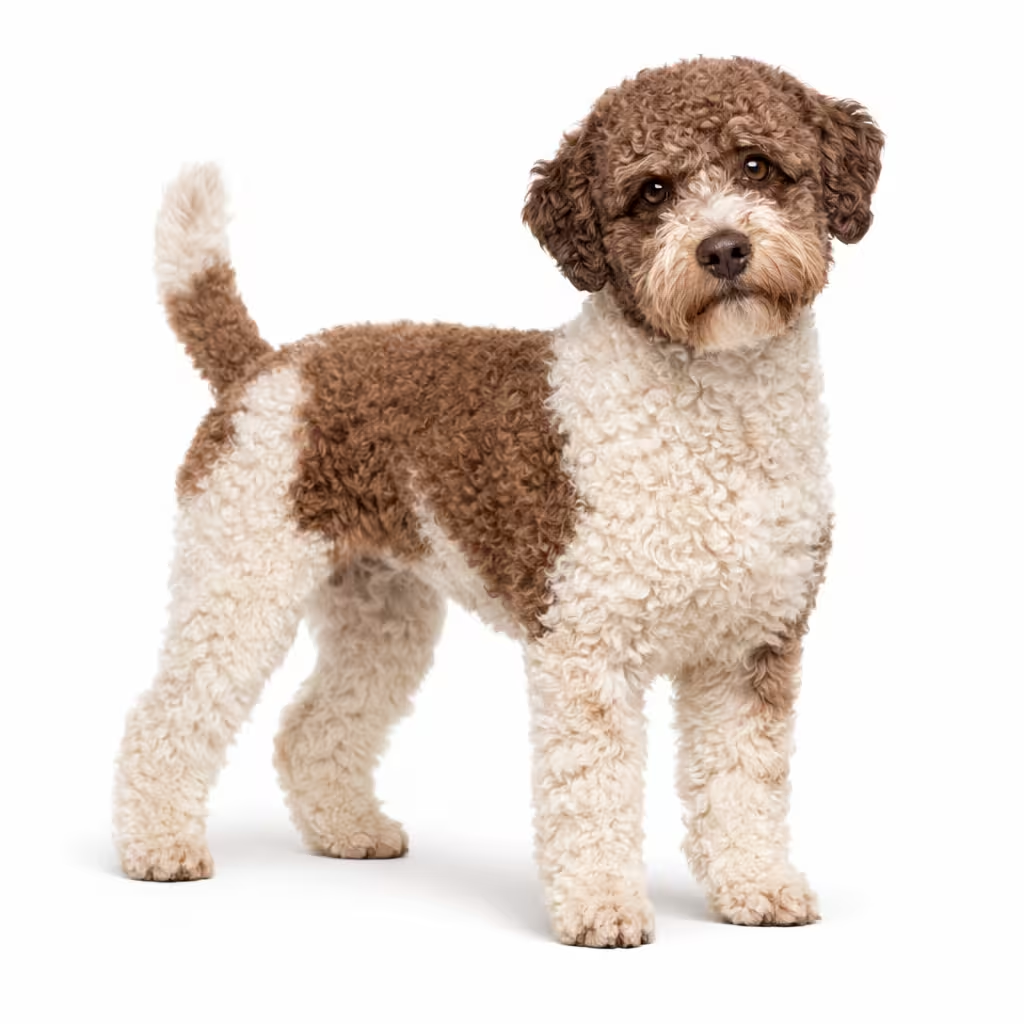
- Dense, single-layer coat that’s curly or wavy
- Common colors include black, brown, white, or combinations thereof
- Non-shedding but not low-maintenance—matting is a concern
- Requires frequent brushing and regular professional grooming
- Can be kept in a traditional “retriever clip” or “lion clip”
Diet & Nutrition Needs
Lean, active fuel plan:
- High-protein, high-quality food for working breeds
- May require more calories than other breeds their size due to high activity levels
- Monitor weight closely—some are prone to gaining if under-exercised
- Omega-3s help maintain coat and joint health
- Provide fresh water after activity to support hydration
Health Care Tips
Balance activity with preventive care:
- Prioritize hip and heart screenings with breeders or vets
- Begin early socialization and training—they’re smart but strong-willed
- Daily mental and physical exercise is non-negotiable
- Regular grooming keeps coat healthy and mat-free
- Watch for signs of Addison’s, especially under stress
This breed is especially well-suited for:
Related Breeds



Are they good swimmers? → Yes, excellentDo they need a lot of exercise? → YesAre they easy to train? → YesGood for first-time owners? → SometimesDo they get bored easily? → Yes