Bullmastiff
AKA — Gamekeeper's Night Dog
The Gamekeeper's Night Dog on Your Sofa
Bullmastiffs are quiet, affectionate giants whose power makes early manners essential. Expect stranger awareness, drool, heat limits, and giant veterinary bills.
Breed traits at a glance
A Bullmastiff usually prefers steady walks and outdoor time over endurance sports. Daily movement matters, while heat and developing joints set firm limits.
They can learn well and still see little value in repetition. Calm consistency, food rewards, and early household rules beat physical confrontation.
Many are warm with their own family, but a casual bump from a 120-pound dog can send a small child flying. Supervision is essential.
The short coat needs simple weekly care. Skin folds, ears, nails, and the drool towel usually demand more attention than brushing.
The breed was developed to work without announcing itself. Individuals still bark, but many rely more on presence than constant commentary.
Bullmastiffs shed short hair and produce dander. The coat is easy to brush, but it is not a reliable choice for allergy-sensitive households.
The honest fit check
Is a Bullmastiff right for you?
Bullmastiffs can be remarkably tender at home. That softness lives inside a giant guardian whose training, public behavior, and health care carry real consequences.
Great fit if…
- You value a calm indoor companion and can handle a very powerful dog.
- Early socialization, leash skills, and visitor routines will be household priorities.
- You prefer substantial walks to running or high-mileage dog sports.
- Drool, giant supplies, and expensive veterinary care fit your expectations and budget.
Think twice if…
- You want a dog-park regular who welcomes every unfamiliar dog without hesitation.
- Your schedule requires hard exercise during hot parts of the day.
- You are uncomfortable setting consistent rules for a stubborn, physically imposing adolescent.
- Housing or insurance restrictions could threaten the dog's long-term stability.
Daily reality
- Exercise
- Moderate daily walks and play, kept gentle during growth and reduced in warm weather.
- Shedding
- Moderate short-hair shedding with some seasonal increase.
- Alone time
- Usually happiest indoors near family; build independence and avoid backyard isolation.
- Grooming
- Weekly brushing, regular nails, fold and ear checks, plus towels for drool.
- Size
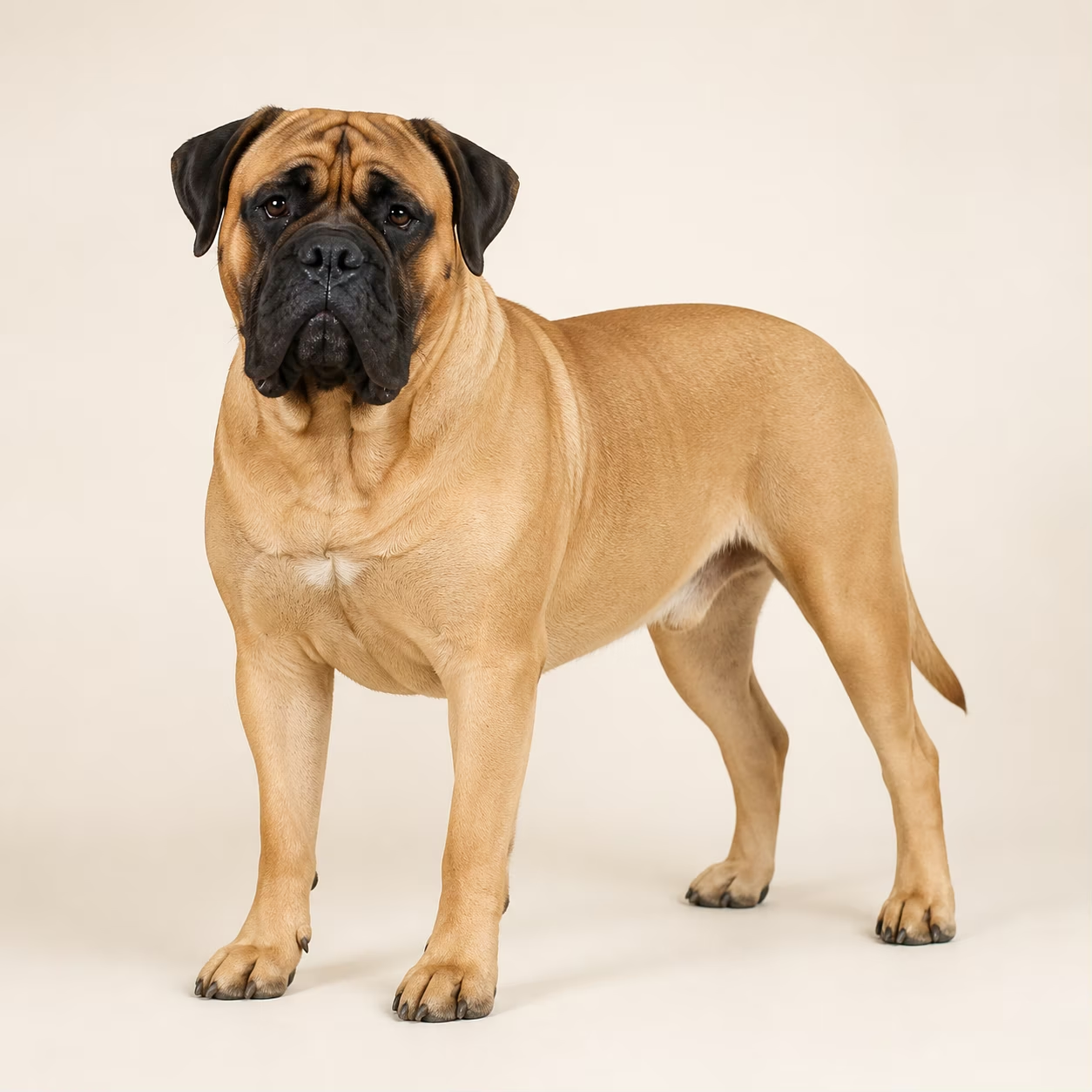
- About 100 to 130 lb and 24 to 27 in, with males generally larger.
Temperament & Personality
The Bullmastiff was developed by English gamekeepers in the 19th century to track, overtake, and hold poachers until help arrived. Mastiff size and Bulldog tenacity produced a powerful dog able to work quietly at night. The modern standard describes a confident, dependable family companion, but the original assignment still helps explain the breed's watchfulness and physical style.
Around family, Bullmastiffs are often affectionate, calm, and content to stay close. Their response to strangers is more measured. A well-socialized dog should be able to move calmly through ordinary life around unfamiliar people. Golden Retriever-style greetings are neither typical nor necessary.
Other-dog sociability varies by individual, sex, experience, and breeding line. Some live successfully with canine housemates. Others become more selective as they mature. Slow introductions and attentive management give owners better information than assuming puppy friendliness will remain unchanged.
Training needs to begin while the puppy is still physically manageable. Bullmastiffs may cooperate readily for food and affection, then lose interest in pointless repetition. Calm rules, practiced in ordinary places, build a far safer adult than force or protection training.
What It's Like To Own One
A Bullmastiff can spend an afternoon sleeping with impressive commitment, then stand up and fill an entire hallway. Their preferred location is often between the family and whatever just made a noise—even when the noise was only the ice maker. The house changes around that body: coffee tables become tail hazards, water bowls acquire splash zones, and guests need a calm entry routine. The dog also needs somewhere to settle that does not require everybody to step over 120 pounds of sleeping guardian.
Exercise is steady rather than extreme. A couple of purposeful outings, training woven into the day, and time near family suit many adults. Summer changes the plan. The broad head, shortened muzzle, and heavy body make cooling difficult, so cool indoor rest is part of responsible care.
Affection is the lovely surprise. Many Bullmastiffs are sensitive with their people and happiest leaning, snoring, or following quietly from room to room. That tenderness never cancels the logistics. It simply explains why devotees willingly keep towels in every room.
I am:Batman
Silent, physically imposing, always aware of who entered the property, and far more tender with the inner circle than the public image suggests.
Famous & Fictional Owners
People and characters whose lifestyle, energy, and identity fit this breed.
Sylvester Stallone
Stallone's own Bullmastiff, Butkus, appeared beside him in Rocky, making this more than a personality match—it is part of the breed's Hollywood history.
Jason Momoa
Formidable presence, relaxed family warmth, and comfort around serious physical power align naturally with a Bullmastiff.
Vin Diesel
Quiet intensity, loyalty, and a family-first identity fit a dog whose affection stays close and whose presence speaks for itself.
Dating Profile
I enjoy moonlit patrols, slow walks, family meetings, and standing silently behind guests until they notice me. I bring my own black mask, a calm indoor manner, and enough drool to mark where I have been. I am not training for your marathon, especially in July. Show me the household rules while I am small, make room on the floor, and keep a towel within reach.
Where They Want To Live
Bullmastiffs belong indoors with their people. A secure yard is helpful for relaxed time outside, but isolation can magnify frustration and territorial habits. Surprisingly, some adults fit apartment routines when the building permits them, the elevator is reliable, and daily walks happen.
Heat is the bigger housing question. Air conditioning and cool resting space are essential in warm climates. Confirm rental, insurance, boarding, and travel rules before bringing the dog home; finding new housing in a crisis can be painfully difficult with a restricted giant breed.
Things To Know
- Adult strength leaves little margin for weak leash skills
- Reserved does not mean aggressive; a well-socialized Bullmastiff should remain calm around strangers
- Dog compatibility varies; careful introductions beat assumptions
- The shortened muzzle and massive body make heat dangerous
- Food, medication, boarding, and veterinary care cost more at giant scale
Gear Guide
- Extra-large crate and supportive bed
- Sturdy leash, broad collar, and well-fitted harness
- Washable drool towels in multiple rooms
- Non-slip rugs for hard floors
- Water and cooling supplies for warm-weather trips
Health Watch: Common Breed Risks
The American Bullmastiff Association recommends hip, elbow, cardiac, eye, and thyroid screening for breeding dogs. The breed's short lifespan makes transparent family health history especially valuable.
- Hip and elbow dysplasia
- Cardiac disease, including subaortic stenosis and cardiomyopathy
- Hypothyroidism
- Entropion and other eye or eyelid problems
- Gastric dilatation-volvulus (bloat)
- Cancer, including lymphoma and bone cancer
Coat, Shedding & Grooming Needs
The short dense coat is easy to maintain. Most hands-on care goes to skin folds, ears, nails, and drool.
- Brush weekly with a rubber curry or grooming mitt
- Expect more loose hair during seasonal shedding
- Wipe facial folds gently and keep them dry
- Check ears and skin for odor, redness, or irritation
- Keep nails short and provide traction on slippery floors
Diet & Nutrition Needs
A Bullmastiff puppy can gain weight faster than sound joints can support it. The goal is steady, lean growth rather than the biggest puppy in the class.
- Use a complete and balanced large- or giant-breed growth food with veterinary guidance
- Keep puppies and adults lean enough that ribs are easy to feel
- Measure meals and use part of the ration during training
- Discuss meal routines and bloat risk with your veterinarian
- Budget for the volume of food a healthy giant dog actually requires
Health Care Tips
Preventive care is logistically easier than moving a sick 120-pound dog. Choose an emergency plan, a vehicle, and a clinic with the breed's size in mind.
- Verify hip, elbow, heart, eye, and thyroid results in a public database
- Learn the signs of bloat and heat distress before an emergency
- Protect developing joints from forced running and repetitive jumping
- Monitor new lumps, lameness, fainting, or exercise intolerance promptly
- Carry pet insurance or maintain a substantial giant-breed emergency fund
Related Breeds


Bullmastiffs offer a compelling contrast: imposing to strangers, laid-back at home, and often deeply affectionate with family. Their moderate exercise needs do not make them easy dogs. Good ownership means early training, careful socialization, summer caution, drool tolerance, and the finances to support a giant body through a short life.