Jack Russell Terrier
Small Dog, Big Chaos
A lightning-fast, endlessly curious terrier that turns everyday life into an extreme sport.
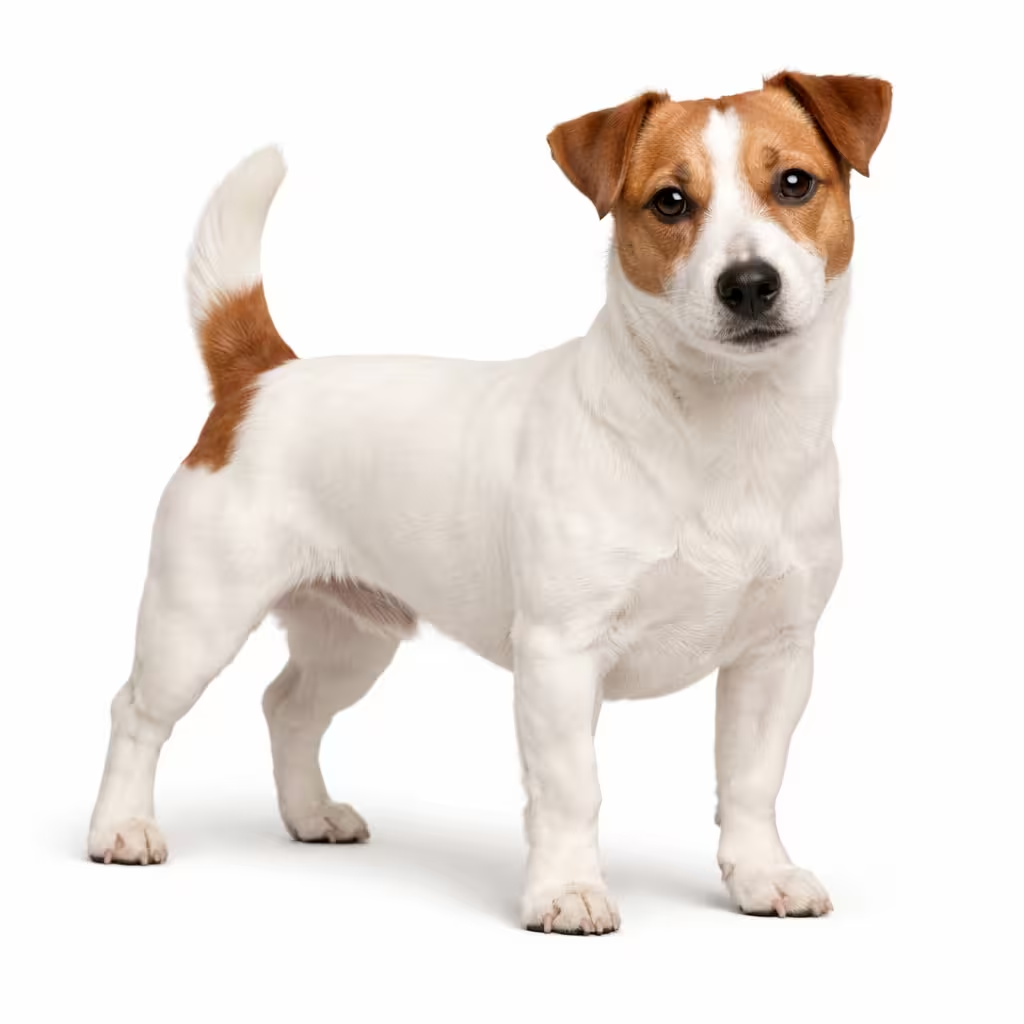
Breed traits at a glance
This breed needs serious daily exercise—think runs, fetch marathons, agility, and problem-solving games. A quick walk won’t cut it. Without both physical and mental outlets, they’ll invent their own entertainment—and you probably won’t like their version.
Exceptionally smart but famously independent. They learn fast, but they don’t always care to comply. Training requires consistency, creativity, and a sense of humor. If you’re boring, they’re out.
Can be great with kids who understand boundaries and energy levels, but their intensity can overwhelm younger or more timid children. With other pets, early socialization is key—especially given their strong prey drive.
Low-maintenance coat overall—weekly brushing is usually enough. They do shed moderately, and rough-coated varieties may need occasional hand-stripping.
This is a vocal breed. Expect alert barking, excitement barking, and sometimes just-for-fun barking. They have opinions—and they share them.
Not hypoallergenic. They shed and produce dander, so allergy-sensitive households should take note.
The honest fit check
Is a Jack Russell Terrier right for you?
Great fit if…
- You have owned a dog before and are ready for the structure a Jack Russell Terrier requires.
- Daily exercise and mental work are already part of the life you want with a dog.
- You respect an independent dog and can train without turning every disagreement into a battle of wills.
- Your children are older or dog-savvy enough to respect boundaries.
Think twice if…
- This would be your first dog and you do not have experienced support or a structured training plan.
- Daily exercise and mental work would be difficult to sustain.
- You expect low grooming to mean no nail, dental, ear, or skin care.
- Your home includes toddlers, rough play, or children who cannot yet respect a dog’s boundaries.
Daily reality
- Exercise
- High: This breed needs serious daily exercise—think runs, fetch marathons, agility, and problem-solving games.
- Shedding
- Light to moderate shedding. Dander is still present in the home.
- Alone time
- Can learn a normal workday routine, but regular all-day isolation is a poor fit.
- Grooming
- Low-maintenance coat overall—weekly brushing is usually enough.
- Size
- 13–17 lbs · 10–15 in
Temperament & Personality
The Jack Russell Terrier is a small working terrier developed in England for fox hunting. Its job demanded speed, courage, persistence, and a willingness to follow quarry underground. Those traits did not disappear when the breed moved into family homes. A Jack Russell is usually alert to movement, quick to chase, enthusiastic about digging, and remarkably hard to tire through casual exercise alone.
The breed learns fast, including habits an owner did not intend to teach. Positive training needs to be clear, varied, and consistent, with useful outlets for problem-solving and prey-driven play. Recall should never be treated as proof that chase instinct is gone. Secure fencing, a leash or long line, and careful management around small animals remain important even for a well-trained dog.
Jack Russells can be affectionate, funny, and intensely engaged with their people. They can also become vocal, destructive, or difficult to settle when every day is physically exciting but mentally unstructured. The best home enjoys training and gives the dog both active work and an off-switch routine. This is a compact athlete, not a low-effort lapdog. For an owner who wants a bold partner for sports, hikes, games, and daily projects, the intensity can be exactly the point.
What It's Like To Own One
Living with a Jack Russell Terrier is like living with a small, unstoppable force of nature. They wake up ready—ready to run, chase, dig, solve, and explore. There’s no such thing as a lazy day in their world. They’re constantly scanning for the next activity, the next challenge, the next thing to turn into a game. If you’re not providing it, they will. And their ideas tend to involve your furniture, your yard, or your sanity.
But meet them at their level, and everything changes. Give them structure, stimulation, and a sense of purpose, and you’ll unlock one of the most entertaining and impressive companions out there. They’re brilliant problem-solvers, fiercely loyal, and endlessly engaging. Training sessions become games. Walks become adventures. Even quiet moments feel charged with their alert, curious presence.
They’re not for the faint of heart—or the low-energy household. But for the right owner, life with a Jack Russell isn’t just pet ownership—it’s a full-on experience. Fast, funny, occasionally chaotic, and completely unforgettable.
I am:Tom Cruise
High-octane, fearless, and always in motion—this breed matches his intensity and love of action.
Famous & Fictional Owners
People and characters whose lifestyle, energy, and identity fit this breed.
Leslie Knope
Boundless enthusiasm, hyper-productive energy, and a need to stay busy at all times.
Indiana Jones
Adventurous, clever, and always chasing the next challenge—perfect match for this fearless explorer.
Tony Stark
Brilliant, restless, and a little chaotic—thrives on stimulation and solving problems.
Dating Profile
Hi, I’m basically a rocket in a small body. I love action, adventure, and anything that keeps my brain busy. I don’t do boring—and I definitely don’t do lazy.
I’m smart, intense, and always ready for the next challenge and I will absolutely outsmart you if you underestimate me. Still, if you can keep up, I’ll be the most entertaining partner you’ve ever had.
If you’re looking for calm and low-key… I am not your dog. But if you want energy, personality, and nonstop fun? Let’s go.
Where They Want To Live
Jack Russells don’t just want space—they want stimulation. A house with a yard helps, but it’s not a substitute for engagement. Without interaction, even a big yard becomes a personal excavation site.
They can adapt to apartment living, but only with serious daily exercise and mental enrichment. We’re talking structured play, training sessions, and real energy output—not just quick walks.
They thrive in active homes where something is always happening. If your lifestyle includes movement, games, and a willingness to engage, they’ll fit right in. Quiet, sedentary homes? Not their vibe.
Things To Know
- Needs far more exercise than most small breeds
- Boredom leads to digging, chewing, and chaos
- Strong prey drive—recall can be unreliable
- Will test boundaries if not consistently trained
- Mental stimulation is just as important as physical exercise
Gear Guide
- Durable chew toys (they will destroy weak ones)
- Puzzle toys and treat dispensers
- Long lead for safe exploration
- Agility or training equipment
- Secure fencing—they are escape artists
Health Watch: Common Breed Risks
Jack Russells are generally healthy but can be prone to:
- Patellar luxation
- Deafness (especially in white-coated dogs)
- Eye conditions like lens luxation
- Legg-Calvé-Perthes disease
- Dental issues if not maintained
Coat, Shedding & Grooming Needs
- Smooth, rough, or broken coat varieties
- Predominantly white with black or tan markings
- Moderate shedding year-round
- Weather-resistant coat
- Minimal grooming needs overall
Diet & Nutrition Needs
Feed for energy and longevity:
- High-quality, protein-rich diet
- Portion control to prevent weight gain
- Split meals into 2 servings per day
- Monitor activity level and adjust calories accordingly
- Healthy treats for training reinforcement
Health Care Tips
- Keep them mentally engaged daily
- Don’t rely on size—this is a working dog
- Secure fencing is essential
- Prioritize early training and socialization
- Regular vet checks for joint and eye health
This breed is especially well-suited for:
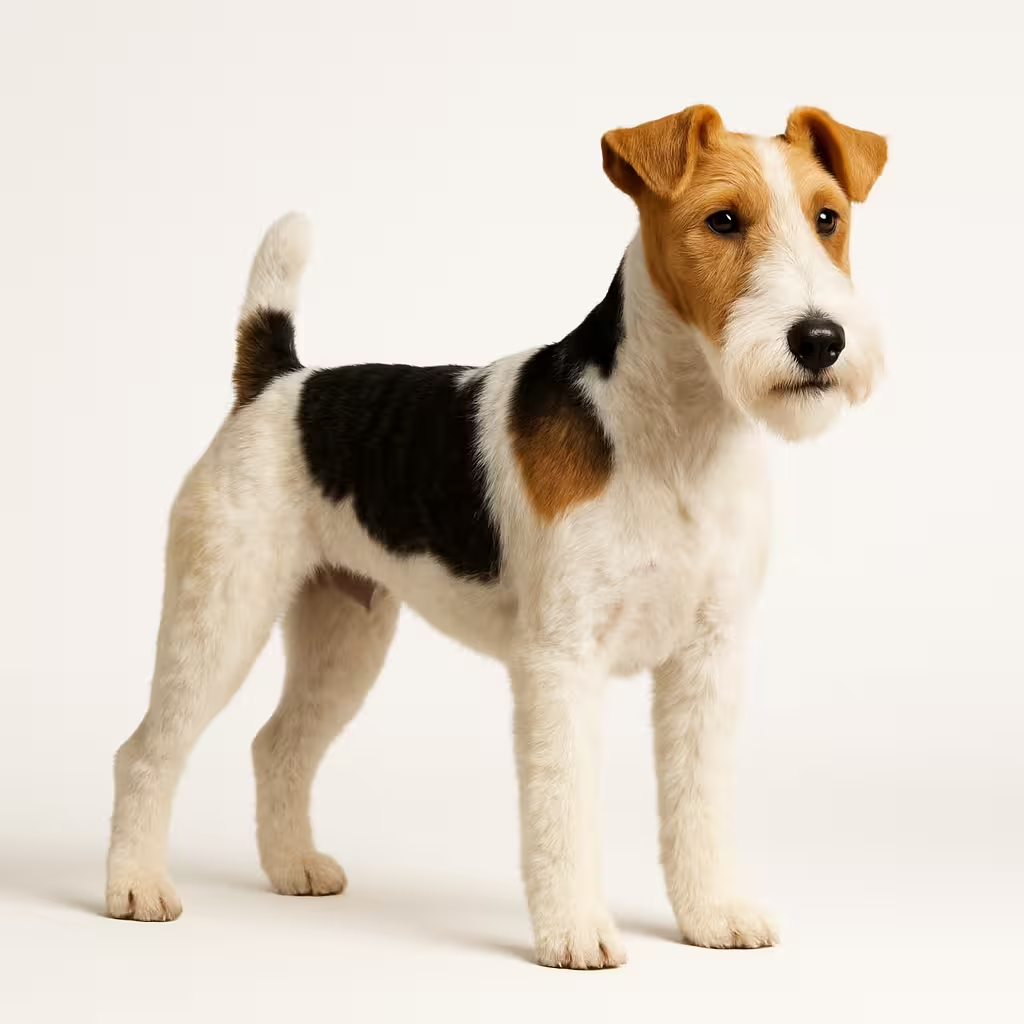
Related Breeds



The Jack Russell Terrier is not a “small and simple” dog. It’s a high-performance companion in a compact frame. They demand time, energy, and engagement, but they give back personality, intelligence, and entertainment in return. If you’re ready to match their intensity, you’ll get a loyal, brilliant, and endlessly fun partner. If not, they’ll quickly outpace you. This is a breed that turns life up to full volume, and for the right person, that’s exactly the point.