

Last reviewed: May 2026.
The best puppy training book for most new owners is The Power of Positive Dog Training by Pat Miller. It teaches how dogs learn, which makes every other training decision easier.
I’ve spent 25 years in dog care. I’m not a trainer, but I’ve helped enough first-time owners through their first year to know which puppy training books actually help and which sit on the shelf.
This guide is the shortlist.
Most training books on Amazon aren’t worth your time. Some are written for trainers, not new owners. Others rest on dominance theory, pack hierarchy, or “alpha” framing. The wolf-pack research those books rely on was publicly retracted by the researcher who first proposed it, so the model is decades out of date. If a book’s central pitch is establishing dominance, or it teaches techniques like alpha rolls and scruff shakes, put it back.
If you only buy one training book, The Power of Positive Dog Training is the strongest single pick. It teaches you how dogs learn, which makes everything else easier. 👉 View on Amazon
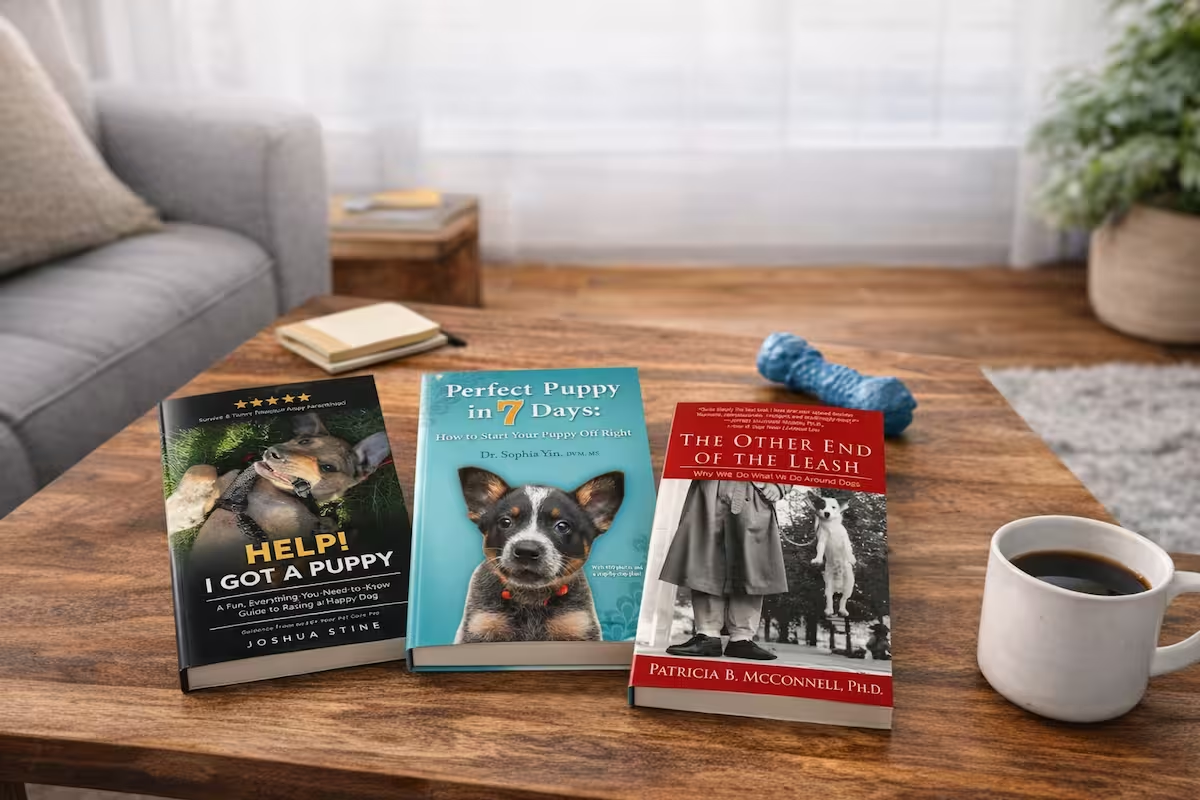
If you want a structured day-by-day plan instead, Perfect Puppy in 7 Days is the other widely recommended starting point. 👉 View on Amazon
That covers training. What it doesn’t cover is the rest of puppy ownership: the things you haven’t even thought about yet that come back to bite you later (pun intended). That’s why I wrote Help! I Got A Puppy. It’s not a training manual. It’s the companion guide to whatever training book you pick. The whole roadmap of first-year ownership: the decisions, the scheduling, the 2 a.m. moments, the things experienced owners take for granted. 👉 View on Amazon
Pair them. A training book teaches your dog. Help! I Got A Puppy keeps you sane while you do it.
Quick Comparison: Best Puppy Training Books at a Glance
| Book | Author | Best For | Skill Level | Check Price |
|---|---|---|---|---|
| The Power of Positive Dog Training | Pat Miller | Understanding training science | Beginner to Intermediate | View on Amazon |
| The Other End of the Leash | Patricia McConnell, PhD | Understanding dog behavior and communication | All levels | View on Amazon |
| Decoding Your Dog | American College of Veterinary Behaviorists | Evidence-based, professional guidance | Intermediate to Advanced | View on Amazon |
| Perfect Puppy in 7 Days | Dr. Sophia Yin | Intensive early foundation building | Intermediate | View on Amazon |
| Puppy Training for Kids | Sarah Whitehead | Families and overwhelmed beginners | Beginner | View on Amazon |
| Help! I Got A Puppy ⭐ Companion pick | Josh Stine | First-time owners facing real-world chaos | Beginner | View on Amazon |
Why some puppy books help, and others don’t
There are a lot of good puppy books out there.
Most are written by experienced trainers, behaviorists, or people who genuinely understand dogs. The issue usually isn’t the quality of the advice. It’s how that advice is delivered, and whether it actually clicks for you as a new owner.
Some books go deep into training theory, which is useful but not always what you need when you’re trying to solve a problem in the moment.
Others lay out structured programs, but can feel hard to follow if your day-to-day reality doesn’t match the ideal scenario in the book.
And sometimes the advice is solid. You just don’t yet have the context or experience to apply it effectively.
That’s where people get stuck.
It’s not that the information isn’t good. It’s that it doesn’t always translate easily into real life, especially in the early stages of raising a puppy.
That’s why it helps to approach this with a mix of resources, so you’re not relying on a single perspective, and you have something to turn to whether you’re trying to understand behavior or just figure out what to do next.
What to Look for in a Good Puppy Training Book
Not all puppy books are useful, especially when you’re actually in it.
Here’s what separates the ones that help from the ones that just sit on your shelf:
Real-world problem solving
You want a book that answers questions you’re actually going to have: what to do when your puppy won’t go out in the rain, how to handle biting when you have kids, how to deal with fear, setbacks, and unpredictable behavior. If it’s all theory and no troubleshooting, it won’t help when things get messy.
Age-appropriate guidance
What works at 8 weeks doesn’t work at 16 weeks. Good books recognize that puppies develop quickly and lay out what to focus on at each stage.
Clear, usable instructions
You shouldn’t have to interpret what the author means. The best books tell you exactly what to do, what to expect, and how to respond when things don’t go as planned. Vague advice isn’t helpful when you’re tired and your puppy is losing it.
Modern, evidence-based approach
Training has evolved. Anything built around dominance or outdated “alpha” concepts isn’t just unhelpful. It can make things worse. Look for books grounded in positive reinforcement and current behavioral science.
Realistic expectations
There’s no such thing as a perfectly trained puppy in a few weeks. Good books prepare you for the ups and downs, not just the ideal outcome.
Best Puppy Books by Category
Here’s where we get practical. Instead of giving you a generic ranked list, I’m breaking down the best books by what you actually need from them.
Best for Positive Reinforcement Training: The Power of Positive Dog Training by Pat Miller
Pat Miller’s book is the gold standard for force-free training methods. This isn’t just about being “nice” to your puppy. It’s about understanding how dogs actually learn and using that science to your advantage.
What makes it work: Miller explains the why behind every technique. You’re not just following steps blindly. You understand that your puppy repeats behaviors that get rewarded and stops doing behaviors that don’t pay off. This understanding helps you troubleshoot when things don’t go according to plan.
The book covers everything from basic obedience to solving common behavior problems. Miller’s clicker training section is particularly strong. She breaks down timing and criteria in ways that finally make sense.
Where it excels:
- Clear explanations of learning theory without academic jargon
- Detailed protocols for teaching basic behaviors
- Strong foundation for building good habits early
- Troubleshooting sections for when training stalls
Where it falls short:
- Not puppy-specific, so you need to adapt some advice
- Doesn’t deeply address puppy development stages
- Light on socialization guidance
- Can feel overwhelming with information if you just want quick fixes
Best for: Owners who want to understand the science behind training and build a strong foundation in positive methods. If you’re the type who needs to know why something works, this is your book.
Best for Understanding Puppy Behavior: The Other End of the Leash by Patricia McConnell
This isn’t a how-to training manual. It’s better. Patricia McConnell, an animal behaviorist, explains how dogs actually think and perceive the world, which fundamentally changes how you approach training.
What makes it work: McConnell breaks down the communication gap between humans and dogs. She explains why your puppy doesn’t understand your words (they’re reading your body language), why they jump on you (primate vs. canine greetings), and why some training methods backfire.
Reading this book is like getting x-ray vision into your puppy’s mind. Suddenly, “bad” behaviors make sense. Your puppy isn’t being stubborn or spiteful. They’re being a dog, and you’ve been accidentally speaking the wrong language.
Where it excels:
- Fundamentally changes how you understand and interact with your dog
- Fascinating insights into canine cognition and behavior
- Helps prevent problems before they start
- Makes you a better observer of your puppy’s communication
Where it falls short:
- Not a step-by-step training guide
- Doesn’t provide detailed protocols for specific behaviors
- More conceptual than practical for immediate problems
- You’ll need to pair it with a how-to book
Best for: Thoughtful owners who want to understand their puppy at a deeper level. This book won’t tell you exactly how to stop puppy biting, but it will help you understand why it happens and how your responses might be making it worse.
Best Beginner-Friendly Guide: Puppy Training for Kids by Sarah Whitehead and Graeme Hall
Don’t let the title fool you. While this book is written to be accessible for families with children, it’s actually one of the clearest, most jargon-free puppy training books available for anyone experiencing new puppy overwhelm.
What makes it work: The simplicity. Whitehead and Hall strip away all the complicated terminology and give you straightforward guidance. Each section addresses a specific puppy behavior with clear instructions and realistic expectations.
The book acknowledges that puppies are chaotic and that training rarely goes perfectly. This realistic approach is refreshing compared to books that make you feel like you’re failing when your puppy doesn’t master something immediately.
Where it excels:
- Extremely accessible writing with no confusing jargon
- Focuses on the most common puppy challenges
- Great for families who need everyone on the same page
- Quick-reference format makes it easy to find what you need
- Realistic about puppy behavior and timelines
Where it falls short:
- Less depth on advanced training concepts
- Doesn’t cover complex behavior problems
- Limited troubleshooting for when things go wrong
- May be too basic if you want detailed training protocols
Best for: First-time dog owners who feel overwhelmed by complicated training books, families with children, or anyone who wants a straightforward guide without getting into the deep science.
Best All-in-One System: Decoding Your Dog edited by the American College of Veterinary Behaviorists
Here’s something different. This book is written and edited by board-certified veterinary behaviorists, which means you’re getting advice from people who’ve seen thousands of dogs and understand both the medical and behavioral sides.
What makes it work: The expertise is unmatched. These aren’t trainers sharing their personal methods. These are veterinarians who specialize in behavior, backed by research and clinical experience. They explain normal puppy development, common behavior problems, and when issues require professional help.
The book covers the entire lifespan of a dog, but the puppy sections are comprehensive. You get guidance on socialization, preventing behavior problems, puppy development stages, and early training. Critically, you also learn to recognize when behavior might indicate a medical issue, which first-time owners often miss.
Where it excels:
- Highest level of professional expertise
- Research-based recommendations
- Covers medical aspects of behavior
- Helps you distinguish normal puppy behavior from problems
- Excellent sections on fear, anxiety, and aggression prevention
- Lifespan approach helps you plan ahead
Where it falls short:
- More clinical and less personal than trainer-written books
- Can be dense with information
- Not always as step-by-step as some owners need
- Some sections go beyond puppy-specific needs
Best for: Owners who want professional, evidence-based guidance and appreciate a medical perspective. Particularly valuable if your puppy shows signs of anxiety, fear, or other concerning behaviors.
Best for Building Strong Foundations: Perfect Puppy in 7 Days by Dr. Sophia Yin
The title is misleading. You won’t have a perfect puppy in seven days. But Dr. Yin’s book (she was a renowned veterinarian and behaviorist) provides an intensive program for building crucial foundation behaviors in your puppy’s first week home.
What makes it work: Dr. Yin focuses on the most critical early days when puppies are most impressionable. The book emphasizes preventing problems before they start, particularly through proper socialization, handling exercises, and establishing good habits from day one.
Her approach is systematic and protocol-driven. You get detailed photo sequences showing exactly how to perform training exercises. The focus on handling and body sensitivity is particularly valuable, setting your puppy up to be comfortable with grooming, vet visits, and physical examination.
Where it excels:
- Intensive focus on the critical early period
- Detailed photo demonstrations
- Strong protocols for handling and gentling
- Prevention-focused approach
- Good for owners who like structured programs
- Excellent foundation for future training
Where it falls short:
- The seven-day timeline is unrealistic for most puppies
- Requires significant time commitment
- Less helpful after the first few weeks
- Doesn’t address many common behavior problems
- Can feel rushed and overwhelming
Best for: Highly motivated owners who are getting a puppy and want to maximize the critical early weeks. Works best if you have time off when your puppy first arrives and can dedicate yourself to the program.
Best Companion Guide for First-Time Owners: Help! I Got A Puppy
If you’re drowning in new puppy overwhelm and need practical answers right now, this is where you start. Help! I Got A Puppy isn’t trying to be a comprehensive training encyclopedia. It’s your survival guide for the actual chaos of raising a puppy.
If most training books feel like theory, this is the one that actually tells you what to do when things go sideways in real life.
What makes it work: Help! I Got a Puppy fills the gap between what training books teach and what actually happens in your living room at 2 AM when your puppy won’t stop crying in the crate. It’s organized around real situations first-time puppy owners face: the puppy who won’t stop biting, the leash pulling that starts on day three, the potty training confusion, the complete lack of a workable schedule.
The book functions like a puppy operating manual. Instead of teaching you training theory and expecting you to figure out application, it gives you the application directly. When your puppy is launching themselves at guests, you don’t need a chapter on impulse control theory. You need to know exactly what to do in that moment.
Where it excels:
- Addresses the real daily chaos first-time owners face
- Step-by-step protocols for common problems like biting and crate training
- Organized by scenario, not by training theory
- Helps you build a realistic schedule and routine
- Acknowledges when you’re overwhelmed and need simple solutions
- Works alongside training books rather than replacing them
- Troubleshoots the specific issues that make new owners want to give up
Where it falls short:
- Not designed as a complete training philosophy
- Doesn’t go deep into advanced obedience
- Won’t satisfy owners who want to understand learning theory
- More focused on management and survival than competition-level training
Best for: First-time puppy owners who feel completely overwhelmed and need practical, immediately applicable guidance. If you only buy one book and you’ve never raised a puppy before, this is the most useful starting point. It complements formal training books by handling the everyday scenarios they skip over.
How to Choose the Right Puppy Training Book for You
With so many options, how do you actually decide? Here’s a practical framework based on your situation.
If You’ve Never Raised a Dog Before
Start with Help! I Got A Puppy. It addresses the immediate survival challenges without assuming you have any background knowledge. Pair it with Puppy Training for Kids if you want additional beginner-friendly guidance.
Once you’re past the initial chaos (usually around 3-4 months), add The Other End of the Leash to deepen your understanding.
If You Want to Understand the “Why” Behind Training
Start with The Power of Positive Dog Training or The Other End of the Leash. These give you the conceptual foundation. Then add a practical guide like Help! I Got A Puppy for day-to-day application.
If You’re Dealing with Specific Behavior Concerns
Go straight to Decoding Your Dog. The professional expertise helps you determine if you’re dealing with normal puppy behavior or something that needs intervention. For issues like leash pulling, you might also want to explore our step-by-step guide on why dogs pull on the leash and how to fix it.
If You Have Limited Time
Choose one book and stick with it. Help! I Got A Puppy is the most efficient for first-time owners because it’s organized by problem, not by training theory. You can jump to exactly what you need without reading cover to cover.
If You Want Your Puppy to Have the Best Start
Use Perfect Puppy in 7 Days during your puppy’s first week, then transition to Help! I Got A Puppy or The Power of Positive Dog Training for ongoing guidance.
You’ll Need Multiple Resources
One book rarely covers everything. You might need Help! I Got A Puppy for daily survival, The Other End of the Leash for understanding behavior, and then online resources or a trainer for breed-specific challenges.
Don’t forget that having the right puppy supplies also makes training significantly easier. The right crate, appropriate toys for different developmental stages, and proper enrichment tools all support what you’re learning in books.
Books Can’t Replace Socialization and Experience
You can read every word about puppy socialization, but until you actually take your puppy to different environments, expose them to various sounds and surfaces, and let them meet friendly dogs, the knowledge stays theoretical.
Training happens in real time, in messy situations, with a wiggly puppy who didn’t read the same book you did.
When Books Aren’t Enough
Some situations require professional help beyond books:
- Puppy showing signs of aggression (not normal puppy biting, but genuine aggressive behavior)
- Extreme fear or anxiety that isn’t improving
- Resource guarding that’s escalating
- Separation anxiety that’s getting worse despite your efforts (here’s how to prevent separation anxiety before it starts))
- Any behavior that makes you feel unsafe
- Training attempts that consistently fail despite following protocols
A book can teach you a lot, but it can’t observe your specific puppy and household dynamics. Don’t wait too long to seek professional help if you’re struggling.
Join a Puppy Class Alongside Reading
Books and classes complement each other perfectly. The book gives you theory and reference material. The class gives you hands-on practice, real-time feedback, and controlled socialization opportunities.
A good trainer can help you adapt book methods to your specific puppy and catch issues you might miss.
If You Want Free Alternatives
Honestly, there’s excellent free content online from reputable sources like the AKC, certified dog trainers with YouTube channels, and veterinary behaviorist websites. Books offer organized, comprehensive information in one place, but you’re not doomed without them.
The best training “resource” is consistency, patience, and actually spending time working with your puppy. A mediocre book used consistently beats the perfect book sitting unread on your shelf.