
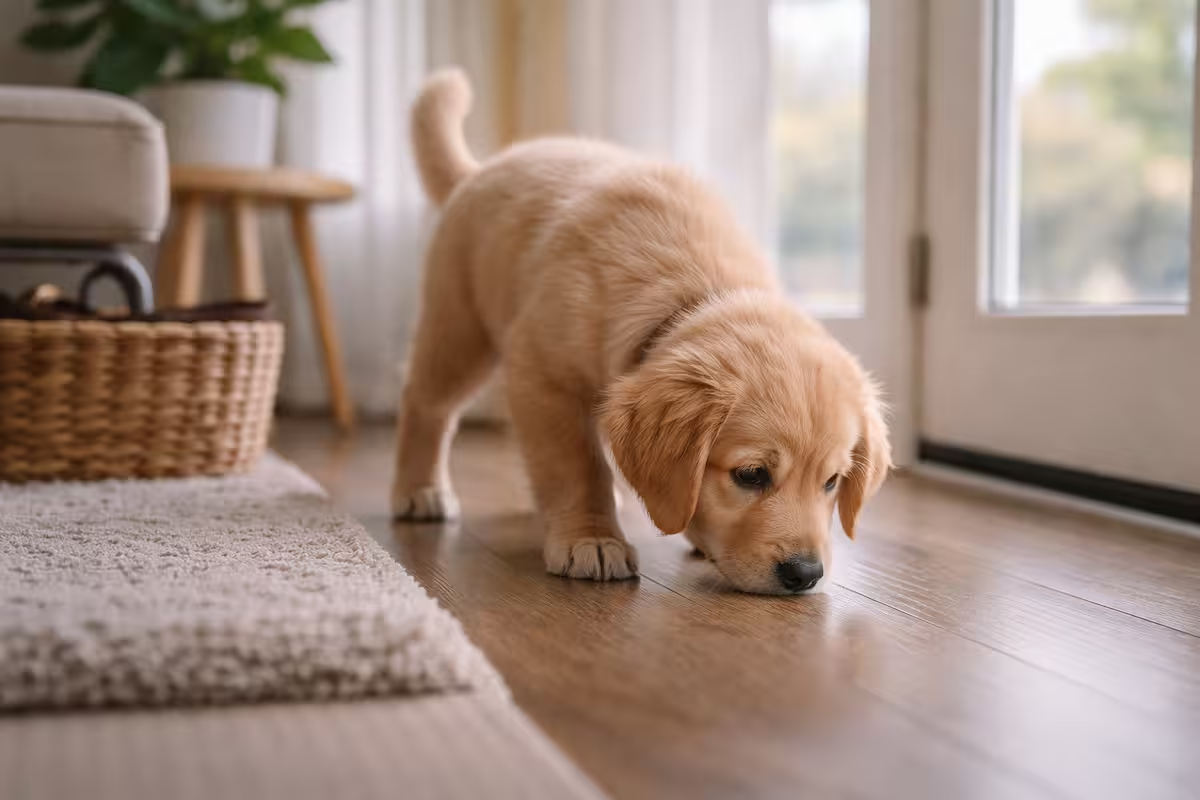
You’re cleaning up the third accident today. Your puppy just peed on the carpet ten minutes after you brought them in from outside. You’re starting to wonder if your dog is broken, or if you’re doing everything wrong.
Here’s the truth: your puppy isn’t stubborn. They’re not stupid. And you’re not failing.
You just don’t have a system yet. And without a system, your puppy doesn’t have a pattern to follow.
Most people approach potty training like their puppy will eventually “figure it out.” They take the dog outside sometimes, hope for the best, and get frustrated when accidents keep happening. That’s not a plan-it’s chaos.
Potty training isn’t about waiting for your puppy to learn. It’s about building a pattern so clear and so consistent that accidents become nearly impossible. When you control the environment, follow a predictable puppy potty training schedule, and remove randomness, your puppy learns fast. You need to know how often a puppy should go out, what triggers accidents, and how to stop puppy accidents in the house before they become a habit.
This guide gives you the exact system. No theory. No fluff. Just the step-by-step process that works in real life.
Quick Start: The Potty Training Plan in 30 Seconds
👉 If you do nothing else, do this:
Take your puppy out:
- after waking
- after eating
- after play
- every 1–2 hours
Reward immediately after they go
No unsupervised freedom
Use crate or pen when not watching
Clean accidents with enzyme cleaner
Reality Check: Why Your Puppy Keeps Having Accidents
Before we get into the system, you need to understand what’s actually happening.
Your puppy isn’t “not getting it.” They literally don’t have the physical ability or the understanding yet. Here’s why:
They can’t hold it very long
A puppy’s bladder is tiny. As a general rule, puppies can hold their bladder for about one hour per month of age, plus one. So a 2-month-old puppy can hold it for about 3 hours maximum. And that’s during sleep. When they’re awake and active, it’s much less.
If you’re expecting your 8-week-old puppy to go 5 hours without peeing, you’re setting them up to fail.
They don’t know where to go
Your puppy doesn’t understand that carpet = bad and grass = good. To them, it’s all just ground. They’ll pee wherever they happen to be when the urge hits.
You have to teach them the distinction. And that takes repetition.
You haven’t built the pattern yet
Dogs learn through patterns. If potty breaks are random, rewards are inconsistent, and accidents sometimes happen without consequence, there’s no clear pattern to learn.
The faster you create a predictable routine, the faster your puppy learns.
They’re getting opportunities to fail
Every time your puppy has an accident inside, they’re practicing the wrong behavior. If they have free access to the house and no supervision, accidents are inevitable. And each accident makes the problem worse because it reinforces the pattern of peeing inside.
Your job isn’t to punish accidents. It’s to prevent them from happening in the first place.
The Core Principle: How Potty Training Actually Works
Here’s the framework that makes everything else make sense:
Potty training = pattern + repetition + management
Let’s break that down.
Pattern
Your puppy needs to experience the same sequence over and over: feel the urge to pee, go outside, pee on grass, get rewarded. When this happens consistently, their brain starts to connect the dots. “When I need to pee, I go outside. When I pee outside, good things happen.”
Repetition
One or two successful potty breaks outside won’t do it. You need dozens. Hundreds. The more times your puppy repeats the correct behavior, the stronger the habit becomes.
Management
This is the part most people skip, and it’s why they fail. Management means controlling your puppy’s environment so they don’t have the opportunity to make mistakes. If your puppy can’t wander off and pee in the other room, they won’t. And if they’re not practicing the wrong behavior, they’ll learn the right behavior faster.
Management isn’t forever. It’s temporary. But in the beginning, it’s everything.
👉 Accidents aren’t mistakes—they’re information about what’s breaking in your system.
The 5-Step Potty Training System
This is the system. Follow it exactly, and you’ll see progress within days.
👉 If you follow this exactly for the next 7 days, you should start seeing fewer accidents almost immediately.
Step 1: Control the Environment
Your puppy should not have free access to your house. Not yet.
When you can’t actively supervise your puppy, they should be in a contained space: a crate, a playpen, or a small puppy-proofed room. This isn’t punishment. It’s management.
Dogs instinctively avoid soiling their sleeping area. A properly-sized crate (just big enough for them to stand, turn around, and lie down) naturally encourages them to hold it. If the crate is too big, they’ll pee in one corner and sleep in the other.
When your puppy is out of the crate, they should be in the same room as you, within eyesight. If you can’t watch them, they go back in the crate or pen.
No exceptions.
If your puppy fights the crate, start with proper crate training first—it makes potty training 10 times easier (and prevents most accidents altogether).
Step 2: Set a Predictable Schedule
Puppies need to go out at specific, predictable times. Here’s when:
First thing in the morning, the second you let them out of the crate.
After every meal. Usually within 5-15 minutes.
After naps. Every single time.
After play sessions. Running around gets things moving.
Before bed.
Every 1-2 hours during the day if they’re younger than 4 months.
Set timers if you need to. Write it down. Make it non-negotiable.
Take your puppy to the same spot outside every time—this consistency helps reinforce the behavior faster.
Sample Puppy Potty Training Schedule
👉 If you’re not sure what this actually looks like in real life, here’s a simple example you can follow.
7:00 AM – Wake → outside immediately
7:30 AM – Eat breakfast → outside within 15 minutes
8:00–10:00 AM – Nap in crate
10:00 AM – Outside
10:30 AM – Play session → outside after
11:00 AM–12:30 PM – Nap
12:30 PM – Outside
1:00 PM – Eat lunch → outside within 15 minutes
1:30–3:30 PM – Nap
3:30 PM – Outside
4:00 PM – Play → outside after
5:00 PM – Outside
6:00 PM – Eat dinner → outside within 15 minutes
6:30–8:00 PM – Supervised activity, outside every hour
8:00 PM – Outside
10:00 PM – Final potty break before bed
This is just an example. Adjust based on your puppy’s age, breed, and individual needs. The key is consistency.
Step 3: Reward Immediately
The moment your puppy finishes peeing or pooping outside, reward immediately. Not when you walk back inside. Not 30 seconds later. Immediately.
Use high-value treats. Something they love. Chicken, cheese, hot dog pieces. And use a happy voice. Make it a party.
This is how your puppy learns that peeing outside = amazing things happen.
If you reward too late, they won’t connect the treat to the behavior. Timing is everything. This is the single biggest reason potty training fails—people reward too late. If you’re even a few seconds late, your puppy won’t make the connection.
Step 4: Supervise or Contain
This is the rule: your puppy is either in their crate/pen, or they’re being actively supervised.
Active supervision means you’re actively watching them the entire time. Not scrolling your phone. Not cooking dinner while they wander into the hallway. Watching.
If you see signs they need to go (sniffing, circling, whining, heading toward the door), pick them up and get them outside immediately.
If you can’t supervise, crate them. It’s that simple.
Step 5: Handle Accidents Correctly
Accidents will happen. Especially in the first few weeks. Here’s what to do:
If you catch them in the act, interrupt with a calm “uh-oh” or clap, then immediately pick them up and take them outside. If they finish outside, reward them.
If you find an accident after the fact, don’t react. Your puppy won’t understand why you’re upset. Just clean it up with an enzyme cleaner (regular cleaners don’t remove the scent) and move on.
Do not yell. Do not rub their nose in it. Do not punish. Punishment doesn’t teach them where to go. It just teaches them to hide from you when they need to pee.
How Often Should a Puppy Go Out?
This is one of the most common (and most misunderstood) questions, and the answer depends on your puppy’s age.
Age-based breakdown:
8 weeks old: Every 1-2 hours when awake, can hold it about 2-3 hours overnight
12 weeks old: Every 2-3 hours when awake, can hold it about 4 hours overnight
16 weeks old: Every 3-4 hours when awake, can hold it 5-6 hours overnight
6 months old: Every 4-6 hours when awake, can usually hold it through the night
The rule of thumb: Puppies can generally hold their bladder for one hour per month of age, plus one. So a 3-month-old puppy can hold it for about 4 hours maximum.
But this is during sleep or calm rest time. When your puppy is awake, active, playing, or has just eaten or drunk water, they need to go out much more frequently.
Awake vs asleep makes a huge difference. Your puppy might sleep through the night for 6-7 hours without an accident, but during the day, they’ll need to go out every 1-2 hours. This is normal.
When in doubt, take them out more often than you think you need to. You will never slow potty training down by going out too often—but you will by waiting too long. You can always extend the time between breaks as they get older and more reliable.
Why It’s Still Not Working
If you’re doing everything right and still seeing accidents, here’s what’s probably going wrong.
”My puppy keeps peeing inside even though I take them out”
You’re probably not taking them out often enough. Go back to the schedule. Set a timer for every hour and take them out, even if they don’t seem like they need to go.
Also check: are you staying outside long enough? Some puppies get distracted. Give them at least 5-10 minutes to sniff around and do their business.
”My puppy pees right after coming inside”
This is frustrating, but it’s common. It usually means one of two things:
They didn’t actually finish peeing outside. They got distracted or you brought them in too soon. Stay outside longer.
They’re excited to come back in, and the excitement triggers their bladder. Try staying outside for a few minutes after they pee, then walking back in calmly. If it keeps happening, assume they didn’t fully go outside and extend your time out there.
”We were doing great, now we’re having accidents again” (regression)
Potty training isn’t always linear. Regression happens, and it’s usually caused by:
A change in routine (you went back to work, started giving more freedom too soon).
A growth spurt (their bladder capacity is increasing, but they haven’t adjusted yet).
A medical issue (urinary tract infections are common in puppies).
If regression happens suddenly, check with your vet. If it’s behavioral, go back to basics: more frequent potty breaks, less freedom, more supervision.
👉 Regression doesn’t mean your puppy forgot—it means something in the system changed.
”My puppy won’t pee outside”
They’re probably distracted, scared, or haven’t figured out that outside is the place to go.
Try:
Going to a boring spot with fewer distractions.
Staying outside longer. Sometimes it takes 10-15 minutes.
Going out right after they drink water or wake up from a nap when you know they need to go.
Using a verbal cue like “go potty” every time they start to pee, so they start associating the phrase with the action.
”My puppy won’t tell me when they need to go”
Most puppies don’t naturally signal that they need to go out. This is a skill you have to teach, and it comes later in the process.
In the beginning, don’t wait for your puppy to tell you. You tell them. You control the schedule.
As they get older and more reliable, you can start teaching them to ring a bell, sit by the door, or bark to signal. But expecting a young puppy to communicate their needs clearly is unrealistic.
”My puppy has accidents in the crate”
If your puppy is peeing in their crate, something’s wrong. This usually means:
The crate is too big. They can pee in one corner and sleep in another. Use a divider to make it smaller.
They’re in the crate too long. Puppies can’t hold it for 8 hours. If you’re gone all day, you need a dog walker or a pen setup.
They were never taught that the crate is their den. If they were previously kept in a cage where they had no choice but to soil it (common in pet stores or bad breeders), they may not have the instinct to keep it clean. This takes longer to fix, but it’s possible with patience.
They have a medical issue. Urinary tract infections or other health problems can make it impossible to hold it. Check with your vet.
”My puppy only pees on carpet”
If your puppy has peed on carpet multiple times, the scent is still there—even if you can’t smell it. Dogs have a much stronger sense of smell, and any lingering odor tells them “this is the bathroom.”
Use an enzyme cleaner specifically made for pet urine (not regular carpet cleaner). Soak the area thoroughly and let it sit.
Block access to that area if possible until your puppy is more reliable.
Consider using a blacklight to find old accident spots you might have missed. Clean all of them.
How Long Does Potty Training Take?
Here’s the honest answer: it depends.
But here’s a realistic timeline if you’re consistent:
Week 1: Frequent accidents. Your puppy is just starting to learn the pattern. You’re learning their signals and adjusting the schedule. This week is about prevention and building the routine.
Weeks 2-3: Fewer accidents. Your puppy is starting to understand that outside = potty. They may begin to sniff around or head toward the door when they need to go. You’re still supervising closely and taking them out frequently.
Months 2-4: Accidents become less frequent. Your puppy can hold it a bit longer and is more reliable about going outside. You’re starting to give a little more freedom, but still using the crate when you can’t watch them.
4-6 months: Mostly reliable. Your puppy can hold it for several hours, rarely has accidents, and may signal when they need to go out. You can start giving more freedom in the house, but supervision is still important.
For more on the full potty training timeline and why progress isn’t linear, including how to handle regressions at 4 and 6 months.
Some puppies are faster. Some take longer. Small breeds often take longer because their bladders are smaller. Some breeds are easier to train than others.
But here’s what matters: consistency speeds everything up. If you’re following the system exactly, you’ll see progress fast. If you’re inconsistent (sometimes crating, sometimes not; sometimes rewarding, sometimes forgetting), it’ll take twice as long.
👉 Progress should feel gradual, not perfect—fewer accidents, not zero right away.
Biggest Potty Training Mistakes to Avoid
Even if you’re doing most things right, these common mistakes can sabotage your progress:
Giving too much freedom too soon
Your puppy isn’t ready to roam the whole house. Every time they have an accident in a room you’re not in, you’re reinforcing the wrong behavior. Keep them contained until they’re truly reliable.
Not rewarding immediately
If you wait until you get back inside to give a treat, your puppy won’t connect it to peeing outside. The reward has to happen within 1-2 seconds of them finishing.
Inconsistent schedule
If you take them out every hour one day and every three hours the next, they can’t build a pattern. Consistency is everything.
Punishing accidents
Yelling, rubbing their nose in it, or acting angry after the fact doesn’t teach them anything except to fear you. It makes the problem worse because they’ll start hiding to pee. If you didn’t catch them in the act, clean it up and move on.
👉 Most potty training problems aren’t about the dog—they’re about inconsistency in the system.
Special Situations
Potty training in an apartment
If you don’t have a yard, you need to get your puppy outside quickly and often. That might mean carrying them down the stairs or elevator to avoid accidents on the way.
Some people use pee pads as a temporary solution, but be aware: pee pads teach your puppy that peeing inside is okay. It can make outdoor training take longer. If you do use them, place them near the door and gradually move them outside.
Potty training in winter or bad weather
Puppies don’t love rain or snow, but they still need to go out. Dress them in a coat if needed, shovel a small area, and stay out with them. Don’t let bad weather become an excuse to skip potty breaks or you’ll undo all your progress.
Potty training while working full time
If you’re gone for 8+ hours, your puppy can’t hold it that long. You’ll need help: a dog walker, a neighbor, a doggy daycare, or a pen with pee pads for emergencies.
The key is keeping the schedule as consistent as possible, even on workdays.
If You Want This to Work Faster, Read These Next:
Potty training is one piece of the puzzle, but it doesn’t exist in isolation. An overtired puppy will have more accidents. A puppy who isn’t crate trained will fight the system. A puppy with no structure will struggle.
• Your puppy’s first 48 hours → sets the foundation for everything, including potty training
• Crate training → prevents accidents and makes this entire process easier
• A consistent daily schedule → removes the guesswork and helps your puppy thrive
• Biting → same root cause as accidents (overtired, overstimulated puppies)
• Troubleshooting common puppy problems → keeps you from spiraling when things go wrong
Potty training isn’t complicated—but it is unforgiving if you’re inconsistent. Stick to the system, remove the guesswork, and your puppy will learn faster than you expect.