The first few days with a new puppy are usually a mix of excitement, sleep deprivation, and a lot of paper towels.
Your puppy doesn’t know where to sleep yet. They don’t know where the bathroom is. And they definitely don’t know which things in your home are toys and which things are… very much not toys.
This is where crate training helps.
When used properly, a crate becomes a safe place your puppy can relax, while also helping you:
- build a consistent routine
- speed up house training
- prevent destructive chewing
- keep your puppy safe when you can’t supervise
Crate training also makes travel, vet visits, and boarding much easier later in life.
If you haven’t chosen a crate yet, start with our guide to the best puppy crates for training, which explains sizing, dividers, and the most reliable crate types for puppies.
This guide combines recommendations from the American Kennel Club, ASPCA, and Humane Society with insights from well-known canine behavior experts including Stanley Coren, Patricia McConnell, and Temple Grandin.
Let’s start with the basics.
What Is Crate Training?
Crate training is the process of teaching a puppy to feel comfortable resting in a crate or kennel. Done correctly, the crate becomes a den-like space where a puppy feels secure, not trapped.
Dogs have a natural instinct to rest in enclosed spaces. This behavior goes back to their wild ancestors, who used dens for safety and protection.
As canine psychologist Stanley Coren explains in The Intelligence of Dogs, “Dogs are den animals and many naturally seek out small enclosed spaces where they can feel safe and secure.”
Animal behaviorist Temple Grandin often describes dogs as animals that feel calmer when they have predictable, structured environments. A crate provides exactly that—a consistent place where a puppy can settle and decompress.
When introduced gradually and positively, a crate simply becomes a modern version of that den.
In practical terms, crate training teaches your puppy three things:
- The crate is a safe place to rest
- Calm behavior earns freedom
- Routine matters
For overwhelmed new owners, that structure makes everything else—sleep, house training, and daily life—much easier.
Why Crate Training Is Important for Puppies
Crate training isn’t just about containment. It solves several common puppy challenges at once.
According to the Humane Society of the United States, crates can be a safe and comfortable place for dogs when introduced gradually and used properly.
Here’s why most trainers recommend crate training.
1. It Helps With House Training
Puppies naturally avoid going to the bathroom where they sleep.
Because of this instinct, crates encourage puppies to hold their bladder until they’re taken outside, which accelerates potty training.
Animal behaviorist Patricia McConnell explains this clearly in The Puppy Primer: “The secret to housetraining is prevention — preventing mistakes while your puppy learns where they should go.”
A properly sized crate helps prevent accidents while your puppy learns the routine.
2. It Prevents Destructive Chewing
Puppies explore the world with their mouths.
Left unsupervised, that curiosity often turns into destructive chewing:
- furniture legs
- baseboards
- shoes
- power cords
A crate keeps your puppy safe when you can’t actively supervise them.
3. It Creates a Predictable Sleep Routine
Puppies need 18–20 hours of sleep per day, but most of them won’t settle on their own.
A crate helps teach puppies how to relax and sleep.
This is especially helpful during the first night with a new puppy, when everything is unfamiliar and overstimulating.
4. It Helps Reduce Anxiety
Structure is calming for dogs.
Stanley Coren, PhD, author of The Intelligence of Dogs, often notes that dogs thrive when they understand what’s expected of them.
Puppies thrive on routine. When their day follows a predictable pattern—sleep, play, eat, potty—they settle more easily.
Animal behavior expert Temple Grandin writes in Animals Make Us Human, “Animals are calmer when they know what is going to happen next.”
A crate helps create that predictability by giving your puppy a consistent place to rest.
When introduced correctly, many adult dogs voluntarily return to their crate because it feels like a safe resting place.
Choosing the Right Crate for Your Puppy
Before starting crate training, it’s important to pick the right crate.
The most important factor is size.
Your puppy should be able to:
- stand up comfortably
- turn around
- lie down fully stretched
But the crate should not be large enough for them to use one corner as a bathroom.
Most puppy owners solve this by using a wire crate with a divider panel, which allows the crate to grow with the puppy.
For a full breakdown of crate types and sizing, see our guide to the best puppy crates for training.
Other helpful crate features
Look for:
- good ventilation
- easy-clean tray
- secure latch
- divider panel for growing puppies
Once you have the crate ready, you can begin training.
How to Crate Train a Puppy (Step-by-Step)
The key to crate training is positive association.
You want your puppy to think:
“This place is comfortable and safe.”
Not:
“This is where I go when the fun stops.”
Follow these steps.
Step 1: Introduce the Crate Slowly
Start by placing the crate in a common area of your home.
Leave the door open and allow your puppy to explore it freely.
You can encourage curiosity by tossing treats or a toy inside.
Do not close the door yet.
The goal is simply to show your puppy that the crate is not something to fear.
📎 Related: See our complete guide to the Best Puppy Training Treats
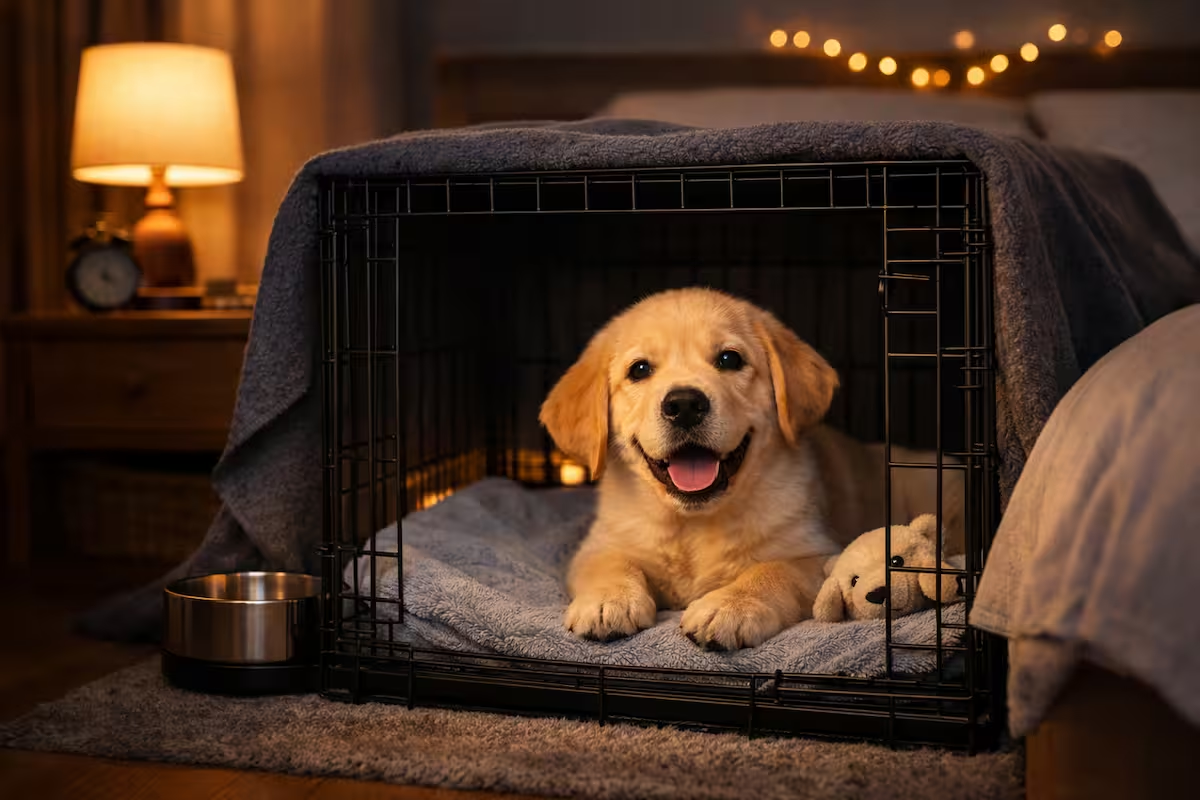
Step 2: Make the Crate Comfortable
Add a few items that make the space inviting.
Good options include:
- soft bedding
- a safe chew toy
- a blanket with familiar scent
Avoid overcrowding the crate with toys. Too many objects can make it harder for your puppy to settle.
Step 3: Start With Short Sessions
Once your puppy enters the crate comfortably, you can begin closing the door briefly.
Start with 5–10 minutes while you remain nearby.
Gradually increase the duration over several sessions.
Short, positive experiences build confidence.
Step 4: Feed Meals in the Crate
One of the easiest ways to build positive association is feeding meals inside the crate.
Place the food bowl in the crate and allow your puppy to eat with the door open at first.
Later, close the door during meals and reopen it once they finish.
Food is a powerful reinforcement.
Step 5: Gradually Extend Crate Time
Over the next several days, slowly increase crate duration.
Eventually you can begin leaving the room briefly while your puppy rests in the crate.
The ASPCA recommends gradually building crate time so dogs learn to relax rather than panic when confined.
Patience during this stage pays off later.
Crate Training Schedule by Age
A puppy’s bladder size limits how long they can stay in the crate.
A commonly used guideline is the “one hour per month of age” rule.
Very young puppies may need overnight potty breaks every 3–4 hours.

.jpg)