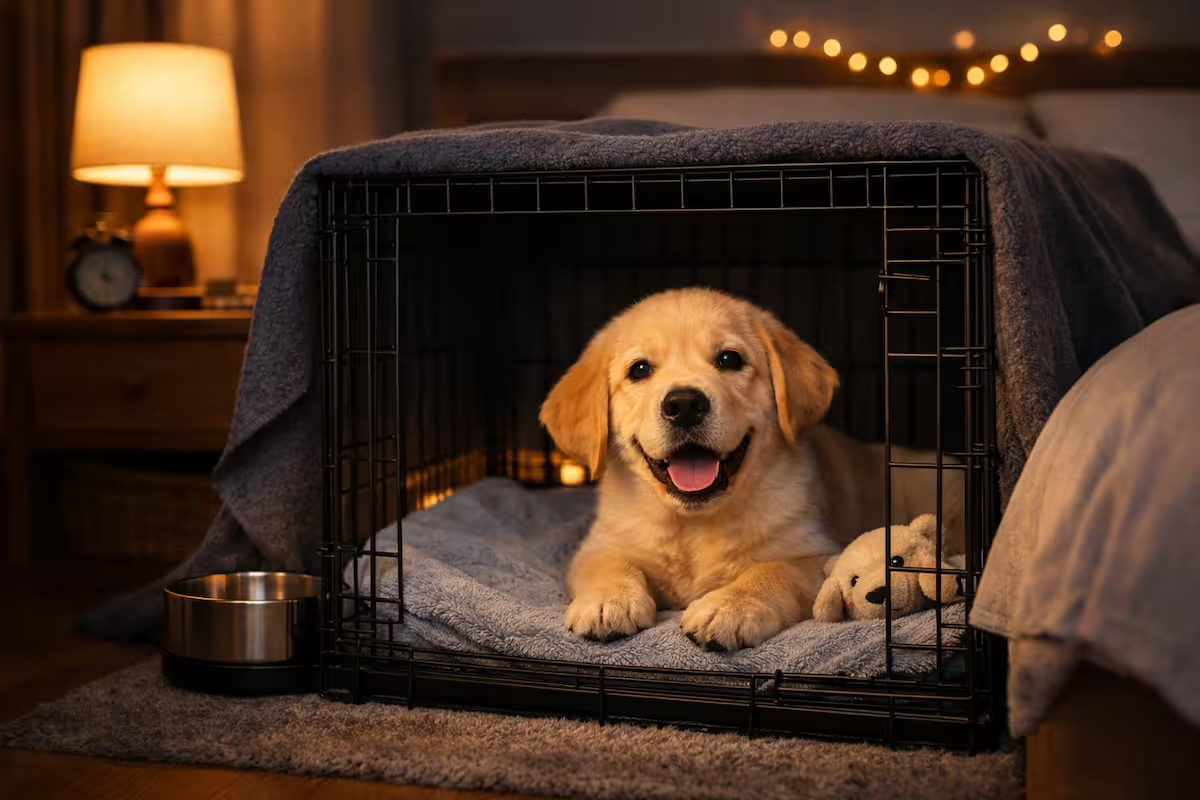
Bringing home a puppy is exciting—but the first few weeks can also be exhausting. Between nighttime whining, potty accidents, and the challenge of teaching a brand-new dog how the world works, most new puppy owners are operating on very little sleep.
A good crate can make this transition dramatically easier.
Crate training works because it taps into a dog’s natural instinct to keep their sleeping area clean. When used properly, a crate becomes a safe den where your puppy can relax, sleep, and learn bladder control. It also prevents destructive behavior when you can’t supervise.
But not all crates are created equal—and choosing the wrong size or style can make crate training much harder than it needs to be.
For this guide, we evaluated the best crate for new puppy owners based on durability, ease of setup, crate-training friendliness, and real-world usability during the chaotic first weeks with a puppy. If you’re preparing for the first night home—or trying to solve early crate struggles—these options consistently work well for new puppy families.
💡 Affiliate Disclosure
Our guides are free for puppy owners, but not free to produce. Some links in this article are affiliate links. If you purchase through them, we may earn a small commission at no additional cost to you. As an Amazon Associate, we earn from qualifying purchases. Using these links helps support the site and keeps our puppy training resources free for new dog owners.
| Crate |
Best For |
Price |
Rating |
Check Price |
| MidWest iCrate |
Best Overall |
$$ |
⭐⭐⭐⭐⭐ |
View
|
| Diggs Revol |
Premium Pick |
$$$$ |
⭐⭐⭐⭐⭐ |
View
|
| Amazon Basics Folding Crate |
Budget Pick |
$ |
⭐⭐⭐⭐ |
View
|
| Petmate Sky Kennel |
Travel |
$$ |
⭐⭐⭐⭐ |
View
|
| Petprsco Soft Crate |
Small Puppies |
$$ |
⭐⭐⭐⭐ |
View
|
🐶 Best Overall Puppy Crate
MidWest iCrate is the crate most trainers recommend for new puppy owners. It includes a divider panel so the crate grows with your puppy and supports easier crate training.
👉 Check Price on Amazon
Our Top Puppy Crates
MidWest iCrate – Best Overall Puppy Crate
Why we recommend it
If you ask trainers for a single recommendation for a crate training puppy crate, the MidWest iCrate comes up again and again. It’s durable, affordable, and includes the one feature new puppy owners absolutely need: a divider panel.
That divider lets the crate grow with your puppy—so you don’t have to buy multiple crates as they get bigger.
Key features
- Divider panel included
- Double front and side doors
- Fold-flat design for storage
- Durable steel wire construction
- Multiple size options
Pros
- Divider grows with your puppy
- Excellent ventilation
- Easy to clean
- Affordable and widely available
Cons
- Not ideal for airline travel
- Basic design compared to premium crates
Best for
New puppy owners who want the best crate for new puppy training without overspending.
👉 Check price on Amazon
Diggs Revol – Best Premium Puppy Crate
Why we recommend it
The Diggs Revol is the luxury option in the puppy crate world. It’s engineered with safety features most crates lack, including rounded edges, reinforced doors, and a collapsible frame that folds smoothly.
If budget isn’t a concern and you want a crate designed to last through your dog’s entire life, this is an excellent choice.
Key features
- Reinforced aluminum frame
- Collapsible design
- Puppy divider available
- Removable tray
- Rounded edges for safety
Pros
- Extremely sturdy
- Modern design
- Quiet door operation
- Excellent safety engineering
Cons
- Expensive
- Heavier than standard crates
Best for
Owners looking for a premium crate for their new puppy that will last for years.
👉 Check price on Amazon
Amazon Basics Folding Metal Crate – Best Budget Option
Why we recommend it
If you want a reliable crate without spending much, the Amazon Basics folding crate works well for basic crate training.
It includes most of the essentials—steel wire construction, double doors, and a removable tray—at a lower price point than many competitors.
Key features
- Folding metal frame
- Removable plastic tray
- Double door access
- Multiple size options
Pros
- Affordable
- Simple setup
- Good ventilation
Cons
- Divider sometimes sold separately
- Lighter construction than premium crates
Best for
Budget-friendly crate training.
👉 Check price on Amazon
Petmate Sky Kennel – Best Travel Crate
Why we recommend it
Plastic airline crates are often required for flying with dogs. The Petmate Sky Kennel is one of the most widely accepted airline-approved crates available.
It also works well for puppies that feel more secure in enclosed spaces.
Key features
- Durable plastic shell
- Airline compliant
- Metal door
- Ventilation openings
Pros
- Excellent for travel
- Strong and secure
- Easy to clean
Cons
- Less visibility for the puppy
- Bulky for small homes
Best for
Owners planning to travel with their puppy.
👉 Check price on Amazon
Petprsco Soft Crate – Best for Small Puppies
Why we recommend it
Soft crates work best for calm puppies or temporary setups. They’re lightweight, portable, and ideal for small breeds.
However, they should not be used for heavy chewers or young puppies still learning crate rules.
Key features
- Soft fabric sides
- Mesh ventilation panels
- Lightweight frame
- Portable design
Pros
- Extremely portable
- Comfortable interior
- Easy storage
Cons
- Not chew-proof
- Not ideal for early crate training
Best for
Small puppies who already tolerate a crate well.
👉 Check price on Amazon
What Size Crate Does a Puppy Need?
Choosing the right crate size is critical for successful crate training.
The basic rule:
Your puppy should be able to stand up, turn around, and lie down comfortably—but not have extra room to use the bathroom in one corner.
If a crate is too large, puppies often potty inside it. That’s why divider panels are so helpful.
A puppy crate divider allows you to expand the space gradually as your puppy grows.

Puppy Crate Size Guide
| Puppy Weight |
Crate Size |
| Under 15 lbs |
24 inch |
| 15–30 lbs |
30 inch |
| 30–60 lbs |
36 inch |
| 60–90 lbs |
42 inch |
| 90+ lbs |
48 inch |
If you’re unsure what size crate for a puppy you should choose, it’s usually best to buy the crate sized for your dog’s adult weight and use a divider panel while they’re small.
Best Crate for the First Night With a Puppy
The best puppy crate for the first night is usually a simple wire crate with a divider panel.
Why?
Because the first night is about comfort and supervision, not perfection.
Place the crate close to where you sleep so your puppy doesn’t feel isolated. Most puppies cry the first few nights simply because everything is new.
Keeping the crate nearby allows you to reassure them and take them outside for potty breaks.
For a full walkthrough of what to expect, see the First Night With Puppy Guide.
You can also read First 48 Hours With Puppy for a step-by-step plan for those first chaotic days.
Wire Crate vs Plastic Crate for Puppies
Many owners debate wire crate vs plastic crate puppy setups. Both work, but they serve different purposes.
| Feature |
Wire Crate |
Plastic Crate |
| Ventilation |
High |
Medium |
| Travel |
Poor |
Excellent |
| Durability |
High |
High |
| Visibility |
High |
Low |
Recommendation: For most homes, a wire crate is the best choice for crate training because puppies can see their surroundings and feel included in the household.
Plastic crates are better for travel and nervous dogs who prefer enclosed spaces.
How to Set Up a Puppy Crate
A good puppy crate setup makes a huge difference in how quickly your puppy accepts it.
Follow these steps:
1. Choose the Correct Size
Use the sizing guide above and install a divider if needed.
2. Add the Divider
The divider prevents accidents and helps reinforce house training.
3. Place the Crate Near Your Sleeping Area
Especially during the first week.
4. Add a Washable Crate Pad
Accidents happen—choose something easy to clean.
5. Introduce the Crate Gradually
Toss treats inside, feed meals in the crate, and allow your puppy to explore it voluntarily.
For a full walkthrough, see the Puppy Crate Training Guide.
For additional guidance on training routines, visit the Puppy Training Basics Guide.
Puppy Crate Setup Checklist
Before bringing your puppy home, make sure you have:
- Puppy crate
- Divider panel
- Washable crate pad
- Safe chew toy
- Optional crate water bowl
You can find the complete preparation list in the Puppy Supplies List.
Mistakes to Avoid When Buying a Puppy Crate
Buying a Crate That’s Too Large
Oversized crates can slow house training.
Using Soft Crates Too Early
Young puppies often chew through fabric crates.
Putting the Crate in Isolation
Dogs are social animals. Crates work best near family activity.
Skipping Divider Panels
A divider is essential for growing puppies.
How Long Should a Puppy Stay in a Crate?
A general rule used by many trainers:
Puppy age in months + 1 = maximum hours in crate
Example:
- 2-month puppy → about 3 hours
- 3-month puppy → about 4 hours
- 4-month puppy → about 5 hours
This guideline helps prevent accidents and keeps crate training positive.
Frequently Asked Questions
What size crate should I get for a puppy?
Choose a crate that fits your puppy’s adult size, then use a divider panel while they grow.
Is it okay to crate a puppy at night?
Yes. Nighttime crating helps prevent accidents and gives puppies a safe sleeping space.
Should puppies sleep in a crate?
Many trainers recommend it, especially during house training.
Can a crate be too big for a puppy?
Yes. Too much space allows puppies to potty inside the crate.
Do puppies cry in crates at first?
Most puppies do during the first few nights. Consistency and gradual crate training usually resolve this quickly.
What should I put in a puppy crate?
A crate pad, safe chew toy, and occasionally a small blanket.
Final Thoughts
Choosing the best puppy crate isn’t about buying the most expensive option. It’s about selecting a crate that supports house training, provides a safe resting place, and fits your puppy as they grow.
For most new puppy owners, a wire crate with a divider panel remains the most practical choice.
Set it up correctly, introduce it gradually, and your puppy will soon see the crate not as confinement—but as their own quiet place to rest. 🐶