
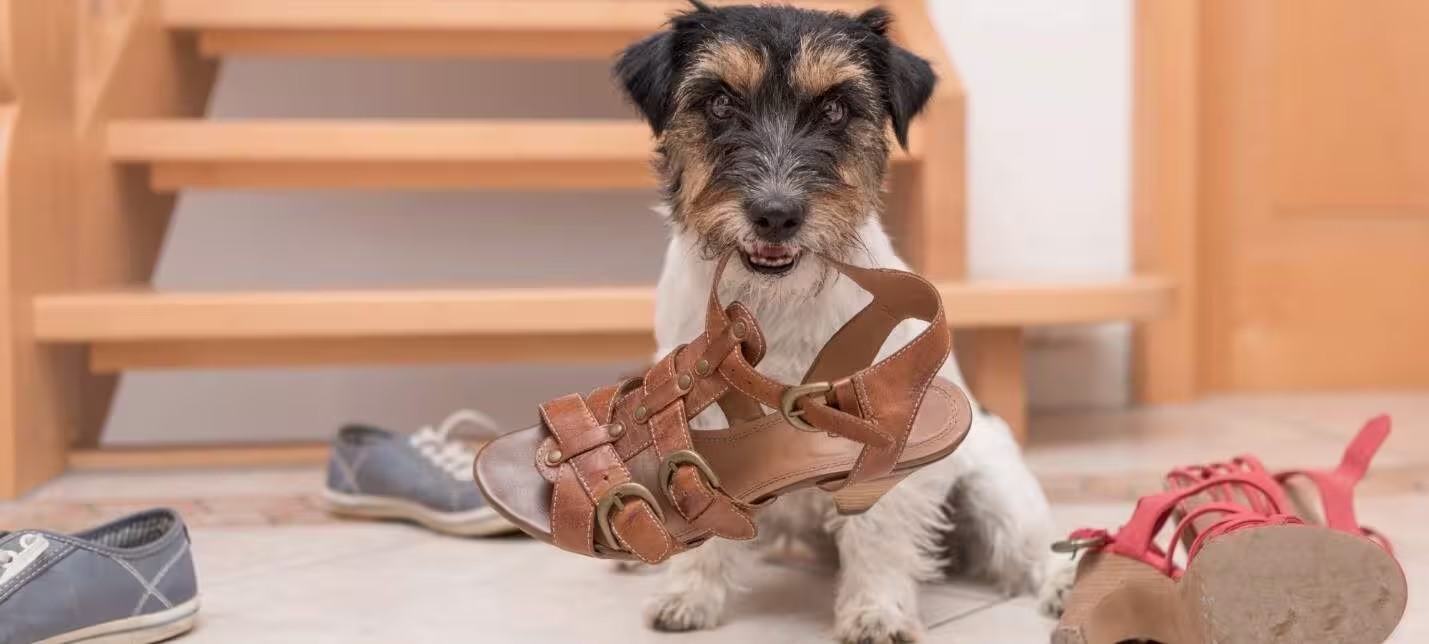
Nearly every puppy owner eventually discovers teeth marks on something they care about.
Shoes. Furniture legs. Phone chargers. Sometimes even the corner of a wall.
If you’re dealing with puppy chewing, you’re not alone—and you’re not raising a “bad dog.” Chewing is one of the most normal behaviors in early puppy development. In fact, it plays an important role in how young dogs explore the world, relieve teething discomfort, and burn off excess energy.
The challenge for owners is that puppies don’t naturally understand the difference between a chew toy and your coffee table.
The good news is that destructive chewing is almost always a temporary developmental phase. With the right management, enough outlets for chewing, and clear guidance, most puppies grow through it without turning your house into a demolition project.
In this guide, we’ll break down:
- Why puppies chew everything
- How long puppy chewing typically lasts
- How to stop puppy chewing furniture and household items
- What puppies should be allowed to chew
Once you understand what’s driving the behavior, solving it becomes much easier.
Chewing is just one of several behaviors that appear during early development. Our Raising a Puppy guide explains the full journey from the first week home through adolescence.
Why Puppies Chew
Puppy chewing doesn’t happen for just one reason. Most of the time, it’s a mix of several normal developmental factors.
Understanding those drivers helps you address the real cause rather than just reacting to the damage.
Teething
One of the biggest causes of puppy chewing everything is teething.
Between about 3 and 6 months of age, puppies begin losing their baby teeth as adult teeth push through the gums. That process can be uncomfortable, and chewing helps relieve the pressure.
If your puppy suddenly seems determined to chew anything they can find, teething is often the reason.
Exploring the World
Puppies explore their environment with their mouths the same way human toddlers use their hands.
Chewing helps them investigate:
- textures
- shapes
- smells
- objects in their environment
From a puppy’s perspective, your shoe and their chew toy are both simply interesting objects worth investigating.
Boredom
Many cases of puppy chewing furniture happen when puppies simply have nothing better to do.
Young dogs have a lot of energy and curiosity. Without enough stimulation, they will naturally look for ways to entertain themselves.
Unfortunately, table legs and couch cushions are often the closest option.
Stress or Adjustment
Puppies going through transitions may chew more than usual. This is especially common during the first days in a new home when everything is unfamiliar. Our guide to the First 48 Hours With a Puppy explains how to help your puppy settle in safely.
Common triggers include:
- moving to a new home
- separation from littermates
- changes in routine
- spending time alone for the first time
Chewing can be a self-soothing behavior during these adjustment periods.
Energy Release
Some puppies chew because they simply need an outlet for pent-up energy.
High-energy breeds especially may turn to chewing when they haven’t had enough physical activity or mental engagement during the day.
This is why destructive chewing often happens when puppies are:
- under-exercised
- under-stimulated
- left alone without structured activities
Is Puppy Chewing Normal?
Yes—puppy chewing is completely normal.
Almost every young dog goes through a chewing phase as part of development. The intensity tends to follow a predictable timeline.
8–12 weeks:
Mild chewing begins as puppies explore their new environment.
3–6 months:
Chewing usually peaks during the teething phase.
6–12 months:
Chewing gradually decreases as adult teeth finish developing and impulse control improves.
This means most puppies do not chew destructively forever. The key is guiding the behavior while they grow out of the stage.
Owners sometimes assume their puppy is being stubborn or defiant, but chewing is rarely about misbehavior. It’s simply a natural behavior that needs appropriate direction.
Teething and Puppy Chewing
The most intense period of puppy teething chewing occurs when adult teeth begin replacing baby teeth.
Puppies are born with baby teeth that start falling out around 3 to 4 months of age. Adult teeth then emerge and continue developing until about 6 months.
This process can cause:
- gum pressure
- irritation
- mild discomfort
Chewing provides relief by applying pressure to the gums.
Signs Your Puppy Is Teething
Common signs include:
- increased chewing on objects
- drooling
- red or slightly inflamed gums
- chewing harder objects than usual
- occasionally finding small baby teeth
During this stage, puppies are especially motivated to chew, which is why providing appropriate outlets becomes critical.
Without them, they’ll happily improvise with furniture, shoes, or anything within reach.
How to Stop Destructive Puppy Chewing
The goal is not to stop chewing completely. That would be unrealistic and unfair to your puppy.
Instead, the goal is to teach your puppy what they are allowed to chew.
These strategies are the most effective.
1. Provide Appropriate Chew Toys
Puppies need designated objects that satisfy their chewing instincts.
Good chew outlets include:
- durable rubber toys
- rope toys
- nylon chew bones
- teething-safe chew toys
Rotating toys every few days can also keep them interesting.
If your puppy consistently chooses the wrong items, it often means they don’t have enough appealing chew options available.
2. Manage the Environment
Prevention is one of the most powerful training tools.
Puppy-proof areas of your home by removing tempting objects like:
- shoes
- remote controls
- pillows
- cords
- children’s toys
Limiting access prevents bad habits from forming.
Many trainers recommend using:
- baby gates
- playpens
- supervised rooms
while puppies are still learning household rules.
3. Increase Physical Exercise
A tired puppy is far less likely to destroy your furniture.
Regular physical activity helps reduce the excess energy that often drives destructive behavior.
Appropriate exercise may include:
- walks
- supervised play sessions
- fetch
- exploring safe outdoor spaces
Just remember that very young puppies still need moderate activity levels appropriate for their age.
4. Provide Mental Stimulation
Mental engagement can be just as important as physical exercise.
Activities that challenge your puppy’s brain include:
- short training sessions
- puzzle toys
- scent games
- learning new commands
These activities help reduce boredom and channel your puppy’s curiosity into productive outlets.
5. Interrupt and Redirect
When you catch your puppy chewing something inappropriate, respond calmly.
Avoid yelling or punishment. Instead:
- Interrupt with a neutral cue like “uh-uh.”
- Remove the item.
- Offer an appropriate chew toy instead.
When your puppy chooses the correct object, praise them.
Over time, this consistent redirection teaches them which items are acceptable.
Common Puppy Chewing Mistakes
Many owners accidentally make chewing worse by responding in ways that confuse their puppy.
Here are some of the most common mistakes.
Punishing Chewing
Punishment often backfires.
Puppies usually don’t understand why they’re being corrected unless the correction happens at the exact moment of the behavior.
If punishment happens after the fact, they may simply learn to chew when you’re not looking.
Not Providing Enough Chew Outlets
If puppies don’t have good chewing options, they’ll create their own.
Providing multiple appropriate chew toys dramatically reduces destructive choices.
Leaving Puppies Unsupervised Too Soon
Freedom should be earned gradually.
Allowing a young puppy full access to the house before they’ve developed good habits almost guarantees damage.
Too Few Toys
Some owners give a puppy one or two toys and assume that’s enough.
But puppies often lose interest quickly. Rotating toys helps maintain novelty and engagement.
Inconsistent Responses
If chewing furniture sometimes results in attention or play, puppies may repeat the behavior.
Consistency helps them understand what’s expected.
What Puppies Should Be Allowed to Chew
Giving puppies appropriate chew outlets is one of the easiest ways to reduce destructive chewing.
Common safe options include:
Rubber chew toys
Durable rubber toys provide resistance while still being gentle on developing teeth.
Nylon bones
These are long-lasting and satisfy strong chewing instincts.
Rope toys
Rope toys offer texture variety and can also be used for supervised play.
Frozen teething toys
Cooling a chew toy in the freezer can provide extra relief for teething gums.
Different puppies prefer different textures, so it can take some experimentation to find favorites.
The goal is to make approved chew items more appealing than household objects.
When Puppies Grow Out of Chewing
Many owners ask, “How long do puppies chew everything?”
The answer varies by individual dog, but most follow a similar pattern.
6–9 months:
Chewing usually begins improving as teething ends.
9–12 months:
Many puppies show significantly less destructive chewing.
12 months and beyond:
Most dogs settle into normal adult chewing habits.
Large breeds sometimes take slightly longer to mature, but the intense puppy chewing phase rarely lasts forever.
Consistent training during this stage makes a big difference in how quickly the behavior fades.
When Chewing Might Be a Problem
While most chewing is normal, certain patterns may signal a deeper issue.
Possible warning signs include:
- chewing walls or structural surfaces
- obsessive chewing that doesn’t stop with redirection
- panic chewing when left alone
- chewing on their own body or paws
These behaviors can sometimes indicate stress, anxiety, or medical concerns.
If chewing seems extreme or compulsive, consulting a veterinarian or professional trainer may be helpful.
Where Chewing Fits in Puppy Development
Chewing is just one of several normal behaviors puppies go through as they mature.
Early development often includes phases like:
- teething
- biting during play
- nighttime whining
- bursts of high energy
Understanding the broader picture helps owners stay patient during these stages.
If you’re navigating multiple puppy challenges at once, our guides can help:
- Raising a Puppy – a full overview of early training and development
- Puppy Development Timeline – what to expect at each age
- Common Puppy Problems – solutions to typical early behaviors
- Puppy Biting – why puppies nip and how to stop it
- Puppy Crying at Night – managing the first weeks at home
Raising a puppy involves several phases of growth and learning. Once you understand what’s normal, those phases become much easier to handle.