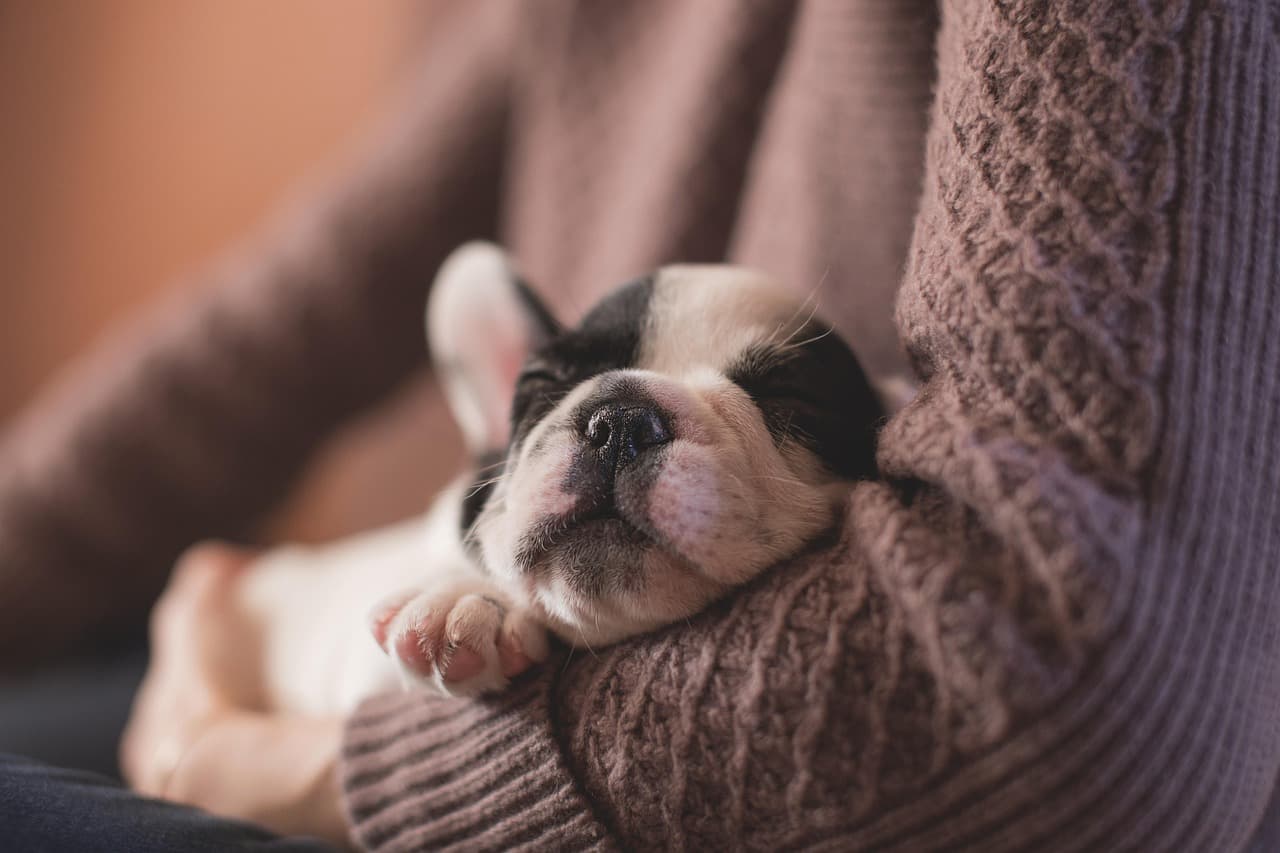
The first time I raised a puppy, I thought I was prepared. I’d spent years around dogs, worked with them every day—and still, within the first week, I realized how different it is when it’s your dog, your home, your responsibility 24/7.
Toronto, my first dog, was big, clumsy, a little manipulative, and frankly pretty lazy—but I loved him to death. He was a 125-pound purebred Rhodesian Ridgeback.
My current pup, Ranger, is the opposite—very sensitive, a bit reactive, and nonstop energy. He’s a rescue who looks just like a Ridgeback (and has a ridge any Ridgeback would be jealous of), but is actually a mix—mostly pit and collie, plus a few other things.
They’re both highly intelligent, which I’m still not sure is a good or bad trait in a dog. Ranger was also a pandemic puppy, which came with its own set of challenges.
What I learned from both is this: raising a puppy isn’t about doing everything right. It’s about understanding what actually matters and building a system that works in real life.
It’s also not just about solving individual problems like biting, potty accidents, or sleepless nights. Puppies grow through predictable stages, and each stage comes with different behaviors, challenges, and training priorities.
Most new owners struggle not because they’re doing something wrong, but because they don’t fully understand why their puppy is behaving a certain way—or why that behavior suddenly changes. Many of the issues that feel frustrating are completely predictable—and fixable—with the right approach.
This guide walks through the major stages of raising a puppy during the first year. Each stage below links to a deeper guide with practical step-by-step advice.
Stage 1 – Before You Get a Dog
Choosing the right puppy, understanding costs, and preparing your home.
Stage 2 – Bringing Your Puppy Home
The first 48 hours, the first week, and establishing early routines.
Understanding developmental stages, training progression, and behavioral changes.
Stage 4 – How to Raise a Stable Adult Dog
Building calm behavior, reinforcing habits, and maintaining structure long term.
Bonus - Common Puppy Behavior Problems
Learn how to deal with puppy biting, crying at night, chewing everything, jumping on people, and separation anxiety.
Before we walk through the stages, there are a few principles that apply to every puppy, regardless of breed.
These ideas shape everything that follows.
Puppies feel safer when the world is predictable.
Structure means:
Without structure, puppies invent their own rules.
With structure, they relax and learn faster.
Structure is all about clarity for your puppy.
The early weeks of a puppy’s life are a critical learning window.
During this time puppies learn:
Positive exposure builds confidence.
Lack of exposure can lead to fear later.
Make sure to introduce your puppy to new things in a calm controlled manner, don't just push them into the deep end to learn how to swim.
Not every dog fits every lifestyle.
Energy level, size, working instincts, grooming needs, and temperament vary widely between breeds.
Many behavior problems actually begin with breed mismatch, not training mistakes.
Choosing a dog that fits your real lifestyle is one of the most important decisions you’ll make.
Many common puppy issues are predictable:
The goal isn’t reacting to these problems after they appear.
It’s setting up the environment so they don’t escalate.
That means:
Puppies do best when their owners are calm and consistent.
That means:
Avoid harsh corrections and focus on being patient and consistent.
Successful puppy ownership begins before the puppy arrives.
Many of the biggest challenges new owners face actually come from decisions made during this stage.
Preparing properly reduces stress later.
In this stage you’ll focus on:
If you’re still in the planning phase, start here:
→ Read the full guide: Before You Get a Dog
Topics covered in that guide include:
The more clarity you have before your puppy arrives, the easier the transition will be.
The first few days with your puppy set the tone for everything that follows.
Your puppy has just left their litter, their familiar environment, and everything they know.
Your job during this stage is stability, not perfection.
The first week focuses on:
The goal is simple:
Help your puppy feel safe while introducing structure.
Start with the guide below:
→ Read the full guide: Bringing Your Puppy Home
Inside that guide you’ll learn about:
Many behavior patterns begin during this stage.
That’s why getting the first days right matters.
Puppies don’t develop in a straight line.
Their behavior changes as they grow, and what works at one stage may not work at another.
Understanding puppy development helps you stay calm when behavior shifts.
Typical puppy stages include:
Each stage brings new challenges:
Instead of reacting to these changes as problems, it helps to recognize them as normal developmental phases.
For a deeper breakdown of what to expect, see the full guide:
→ Read the Puppy Development Guide
Topics covered include:
Knowing what stage your puppy is in makes training much easier.
Eventually the goal is not just a trained dog, but a stable companion.
A stable dog is:
Stability doesn’t happen automatically.
It develops through:
Many owners assume training ends after puppyhood.
In reality, adulthood is when long-term habits are reinforced.
To learn how to build long-term stability, continue here:
→ Read the Raising a Well-Behaved Dog Guide
This stage focuses on:
If you’ve recently brought home a puppy, chances are you’ve already run into at least one behavior that made you stop and wonder, “Is this normal?”
In most cases, it is.
Puppies explore the world with their mouths, have very little impulse control, and are still learning how to live in a human household. Many of the behaviors that frustrate new owners are actually normal parts of development.
The key isn’t eliminating these behaviors overnight. It’s guiding your puppy toward better habits early, before those behaviors become long-term patterns.
Below are some of the most common issues new puppy owners face, along with guides that explain why they happen and what to do about them.
Puppy Biting: Why It Happens and How to Stop It
Puppy Crying at Night: How to Fix It
Puppy Chewing Everything: Why It Happens and How to Stop It
Puppy Jumping on People: Why Puppies Jump and How to Stop It
Puppy Separation Anxiety: Signs, Causes, and How to Help
Each guide walks through what’s normal, what to expect at different ages, and the practical steps that help puppies learn calmer, more appropriate behavior.
Remember: puppy problems are usually temporary. With clear structure, consistent routines, and a little patience, most puppies grow out of these behaviors as they mature.
If you’re ready to go deeper, start with these step-by-step guides:
Focus on stability first.
Your puppy needs a quiet environment, predictable routines, and clear sleeping and potty areas. The goal of the first few days is helping the puppy adjust safely to the new environment.
Most puppies begin settling in within a few days, but full adjustment can take several weeks. Consistent routines and calm handling help speed up the transition.
Many owners find the adolescent phase (around 5–8 months) the most challenging. Puppies become more independent and may temporarily ignore training they previously understood.
For most owners, yes. Puppies require constant supervision, frequent potty breaks, and consistent training. Adult dogs often come with established habits and longer attention spans.
The upside is that raising a puppy gives you the opportunity to shape those habits from the beginning.
Young puppies often sleep 18–20 hours per day. Frequent rest is normal and essential for healthy development.
Most dogs begin settling into calmer routines between 12 and 24 months, depending on breed and energy level. Consistent structure and training help accelerate this process.
Raising a puppy doesn’t require perfection.
But it does require the right order:
If you’re just starting the journey, begin with the first stage:
These guides are your free starter kit. But if you want a step-by-step reference for every stage of puppyhood — from vaccines and crate training to emergencies and enrichment — grab the full book.
Ready to feel more confident with your new pup?

Get immediate access to:
• Puppy Supply Checklist
• Puppy Proofing Checklist
• Kids & Puppies Starter Pack
