
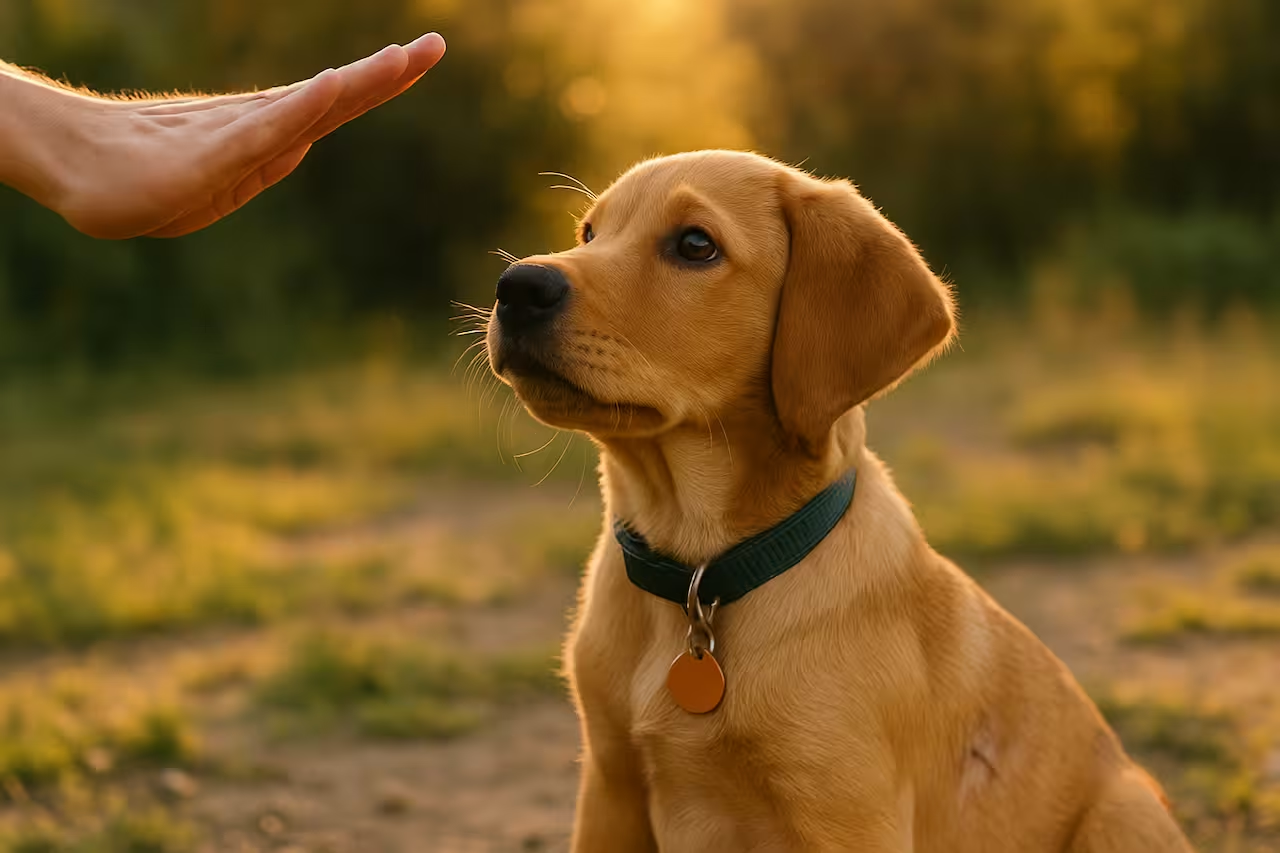
Life-saving commands every puppy should know before adulthood: come, drop it, and wait. They’re for the moments you can’t predict, the ones that happen too fast to think through.
Some dog training tips are optional. These aren’t.
Picture this: Your puppy slips their collar at the park. Or swallows something toxic before you can reach them. Or lunges toward traffic the second you crack open the car door.
These moments happen fast—too fast to think through in real time.
Every puppy is different. Some are bold. Some are cautious. Some are naturally attentive, others couldn’t care less about your voice when there’s a squirrel in sight. But no matter your puppy’s temperament, there are three commands that every dog should know before they reach adulthood:
Come. Drop it. Wait.
These aren’t for show. These are for the moments you can’t predict—the moments that could turn into panic or danger if your dog doesn’t listen.
This isn’t about having a perfectly obedient dog. It’s about having control when the world gets unpredictable.
Why These Three Commands (and Not Others)?
You might be wondering why “sit” or “stay” didn’t make the cut. It’s not that those aren’t useful. But the commands we’ve included here are the ones most likely to prevent injury and protect your dog in unpredictable real-world situations.
“Sit” won’t help if your dog just grabbed a chicken wing off the sidewalk. “Heel” is great for control, but if your leash snaps, it’s recall that saves the day.
These three are non-negotiables. The skills that buy you time, bring your dog back to safety, and give you control when it matters most. They form the foundation of puppy training basics that every responsible owner needs to build on.
They also work best inside a broader foundation. Camo Cross Dog Training’s Good Dog Class curriculum (opens in a new tab) combines recall, drop it, and wait with focus, stay, leave it, mat settling, door manners, leash skills, and controlled greetings.
Command #1: Come (Recall)
The Scenario
You’re in your front yard. The mail carrier opens the gate without latching it. Your puppy sees a squirrel and bolts. You yell, “Come!”
Do they freeze? Do they turn and sprint back? Or do they chase the squirrel across the street?
Why This Command Matters
Dog recall training is the single most important safety skill your dog can learn. It’s what brings them back when they slip their leash, run toward danger, or get distracted in an unfenced area.
Training is prevention, but owners still need a recovery plan. Comfort at Home Pet Services’ loose-dog guide (opens in a new tab) recommends avoiding a chase, lowering social pressure, using food and calm body language, and resisting the urge to lunge for the dog before a slip lead can be used safely.
In urban and suburban settings, distractions are everywhere. Cars, people, food, other dogs. Your dog’s ability to return to you on command protects them when it counts.
How to Train It
Start indoors or in a fenced area. Use a consistent, upbeat cue like “Come!” or “Here!” Keep your tone happy and inviting, not angry or demanding.
Begin by calling your puppy from just a few feet away. When they come to you, reward immediately with high-value treats, praise, or their favorite toy. Repeat this in short sessions throughout the day.
You can also turn recall into play. The San Francisco SPCA’s Fear Free training guide (opens in a new tab) includes a simple recall game that keeps the cue upbeat and gives puppies a reason to race back to you instead of treating “come” like the end of the fun.
Gradually increase distance and add mild distractions. Practice in different rooms, then move to a fenced yard, then to a quiet outdoor space on a long lead. Never practice off-leash recall in an unfenced area until the behavior is solid.
Common Mistakes and How to Fix Them
Never punish recall. If you call your dog and then scold them for something they did earlier, they’ll learn that coming to you leads to bad things. Always reward the act of returning, even if you’re frustrated.
Don’t use your recall command to call your pup for something they don’t like, like leaving the park or coming inside when they’re having fun. Make “come” a cue that always leads to something good.
Avoid repeating the command over and over. If your dog doesn’t respond the first time, move closer, use a happy tone, clap your hands, or create excitement. Then reward when they respond.
Leveling Up the Difficulty
Once your dog reliably comes indoors, start practicing in real-world environments. Try recall during walks in quiet areas, with a long leash as backup. Practice when other dogs are nearby but at a distance.
Use a long training lead (15 to 30 feet) to give your dog freedom while maintaining safety. This lets you practice recall in situations that mimic off-leash scenarios without the risk.
What Success Looks Like
Success isn’t your dog sprinting back to you every single time from day one. It’s your puppy pausing when they hear the cue. It’s them turning their head toward you. It’s them choosing to return even when something interesting is happening nearby.
If your dog only comes when nothing interesting is happening, they don’t actually know recall yet.
Realistic goal for most dogs: reliable recall in low to moderate distraction environments by six to nine months, with continued reinforcement throughout their life.
Command #2: Drop It
The Scenario
You’re at the park. Your puppy scoops up something strange. You can’t see what it is, but they’re chewing fast.
Could be food. Could be toxic. Could be dangerous.
“Drop it.”
Why This Command Matters
This is one of the most useful commands you’ll ever teach. Dogs explore the world with their mouths, and they’re fast. By the time you realize they’ve grabbed something, they’re already chewing.
This command can prevent choking, poisoning, expensive vet visits, and emergency surgeries. It’s also critical for managing resource guarding before it becomes a bigger behavioral issue.
How to Train It
Start with low-value items your dog isn’t obsessed with. A toy works well. Let them hold it in their mouth, then say “Drop it” in a calm, clear voice. Immediately offer a high-value treat, something better than what they’re holding.
The moment they release the item, praise and reward. Let them have the treat. Then give the toy back. It teaches them that letting go pays off.
Practice this exchange dozens of times with different objects: toys, paper, socks, sticks. Gradually introduce items they’re more interested in. Always trade up. Always reward the drop.
Common Mistakes and How to Fix Them
If you’ve ever chased your dog while they proudly carried contraband, you’ve seen how quickly this turns into a game. Stay calm, use your cue, and trade consistently.
Never yank objects out of their mouth. This can trigger possessiveness and make them more likely to guard items in the future. It can also damage their teeth or create a negative association with your hands near their face.
Don’t only practice with toys. Practice with real-world items they’re likely to grab: tissues, wrappers, leaves, food scraps. The more variety, the better the generalization.
Leveling Up the Difficulty
Once your dog reliably drops toys and household items, practice during walks. Drop a treat on the ground, let them go for it, then cue “Drop it” before they swallow. Reward with something even better.
Practice with food items at home in a controlled setting. Use something they like but won’t choke on. This prepares you for real-world moments when they grab pizza crust off the sidewalk.
What Success Looks Like
Your dog doesn’t have to drop things instantly every time. Progress looks like them pausing, loosening their grip, or spitting out the item within a few seconds of your cue.
In high-excitement moments, expect slower responses. That’s normal. Consistent practice builds the habit. Over time, the response becomes automatic.
Command #3: Wait
The Scenario
You open the car door. Your puppy lunges to jump out, but a car is speeding by.
“Wait.”
They pause. You clip the leash. Crisis averted.
Why This Command Matters
Wait is the calmest of the three commands and one of the most powerful. It teaches impulse control for dogs, which is the foundation of almost every other behavior you’ll ever want from them.
This is where your dog learns not to act on the first impulse. That moment of hesitation builds self-control and gives you a critical second to assess or intervene. It’s especially useful in urban environments where doorways, stairs, and car doors can be hazards.
How to Train It
Start at thresholds: doorways, stairs, the car, their food bowl. These are natural moments where your dog is already motivated to move forward.
Stand in front of the door or threshold with your dog on leash. Say “Wait” in a calm, neutral tone. If they try to move forward, block them gently with your body or the leash. No punishment, just prevention.
The moment they pause, even for a second, say “Okay!” (or your chosen release word) and let them move forward. Repeat this several times a day at different thresholds.
Gradually increase the duration of the wait. Start with one second, then two, then five. Keep your tone calm. This isn’t punishment—it’s communication.
Common Mistakes and How to Fix Them
Don’t skip the release cue. If you say “Wait” but never tell your dog when they’re allowed to move, they won’t understand the boundaries of the behavior. Always pair “Wait” with a clear release like “Okay!” or “Free!”
Don’t use “Wait” and “Stay” interchangeably. “Stay” typically means don’t move until I come back to you. “Wait” means pause until I give you permission to move forward. Keep them distinct.
Avoid using a harsh tone. Wait isn’t about intimidation. It’s about building a habit of checking in with you before moving through exciting or potentially dangerous spaces.
Leveling Up the Difficulty
Once your dog understands the concept, practice in higher-distraction scenarios. Use “Wait” before throwing a ball. Before opening the door when a delivery arrives. Before letting them out of the car in a busy parking lot.
Practice at the front door when guests arrive. This teaches your dog that door openings don’t always mean chaos.
What Success Looks Like
Success is your dog pausing at thresholds without you having to physically block them. It’s them looking at you before moving forward. It’s them waiting at the car door until you give the release, even when they’re excited to get out.
This usually takes a few weeks of consistent practice. But once it clicks, it becomes one of the most useful habits your dog will ever learn.
When These Commands Fail
Let’s be honest: sometimes your dog won’t listen. They’ll ignore your recall. They’ll refuse to drop the sandwich. They’ll bolt through the door anyway.
This doesn’t mean you’ve failed. It means you’re still training.
Most command failures aren’t disobedience. They’re gaps in training.
What to Do When Your Dog Ignores You
Don’t panic. Repeating the command louder won’t help. Instead, assess the situation. Is your dog too distracted? Too far away? Not motivated enough by your reward?
If they don’t respond, don’t punish them after the fact. You can’t correct a behavior that already happened. Make a note of what went wrong and adjust your training.
Move closer. Increase the reward value. Decrease the distraction level. Go back to an easier version of the exercise and rebuild from there.
Training vs. Testing
Here’s the distinction: don’t test commands in high-stakes situations before your dog is ready. If you’ve only practiced recall indoors, don’t expect it to work off-leash at a crowded dog park.
Training is controlled, repeated practice in low to moderate distraction environments. Testing is what happens in the real world. You need hundreds of training reps before you can rely on a behavior during a test.
If your dog fails a real-world test, it doesn’t mean they’re stubborn. It means they need more training reps at that level of difficulty.
When to Get Help
If your dog consistently ignores these commands despite weeks of practice, or if they show signs of aggression or anxiety during training, consult a professional. Some behaviors need hands-on guidance, and that’s okay.
Look for trainers who use positive reinforcement methods and have experience with your specific challenges. Proper training foundations make everything else easier, including socialization and managing exercise needs.
Integrating These Commands Into Daily Life
You don’t need formal training sessions to reinforce these commands. The best training happens in micro-moments throughout your day.
Consistency beats intensity when a puppy is learning. Butcher’s “3 Rs” approach (opens in a new tab)—repeat, reward, reinforce—is a useful reminder to mark the right choice immediately, keep practice positive, and build reliability through short sessions repeated across ordinary days.
Verbal cues aren’t your only option. Positive Changes Dog Training’s hand-signal guide (opens in a new tab) explains how visual cues can support communication in noisy places, at a distance, or when a dog can’t rely on sound. Pairing the same hand signal with the same word gives your puppy two clear ways to understand you.
Routine: Morning walk prep
Command to Reinforce: “Wait” at the door
Notes: Practice every single time you leave the house.
Routine: On walks
Command to Reinforce: Practice “Come” from short distance
Notes: Use a long leash for safety. Call your dog back to you randomly during the walk, reward, then release them to keep walking.
Routine: Indoor play
Command to Reinforce: “Drop it” with toys
Notes: Make it a game, not a battle.
Routine: Feeding time
Command to Reinforce: “Wait” at the bowl
Notes: Start with just a one-second wait and build from there.
Routine: Car rides
Command to Reinforce: “Wait” before exiting the car
Notes: Prevents your dog from jumping out into traffic or a busy parking lot.
Routine: Doorbell rings
Command to Reinforce: “Wait” before greeting guests
Notes: Teaches your dog that door openings don’t always mean chaos.
Consistency beats intensity. Think micro-moments, not 30-minute bootcamps. Five one-minute practice sessions throughout the day are more effective than one exhausting training marathon.
These small repetitions build habits. Habits build reliability. Reliability keeps your dog safe.
Mistakes to Avoid
Repeating the command 10 times. Say it once with clarity. If your dog doesn’t respond, help them reset and try again. Repeating it teaches them to ignore you until you’ve said it five times.
Making the command a punishment. Calling your dog and then scolding them will make them avoid you next time. Always reward the behavior of responding.
Relying on high-stress moments to “see if it works.” These commands need muscle memory. Practice them before you need them, not during an emergency.
Using treats inconsistently. Especially in the early stages, reward every single success. Once the behavior is solid, you can fade to intermittent rewards, but don’t skip them entirely.
Training only in one location. Your dog doesn’t automatically generalize. If you only practice recall in your living room, they won’t understand it applies at the park. Train in multiple environments.
Expecting perfection too soon. These are life-long skills. Even well-trained adult dogs need refreshers. Progress isn’t linear.
Skipping practice when life gets busy. The worst time to stop training is when your schedule is chaotic, because that’s when you need reliable behavior most. Even 30 seconds of practice at the door or during a meal makes a difference.
Final Thoughts
Training isn’t about perfection. It’s about preparedness.
You don’t need a perfectly behaved dog. You need a dog who knows what to do when the world gets unpredictable. A dog who will come back when it matters. A dog who will release something dangerous. A dog who will pause long enough for you to make a decision.
Start with these three commands. Practice often. Praise big. Keep it light, keep it consistent, and remember: your calm presence is half the training.
Because one day, these commands might save your dog’s life.
And when that day comes, you’ll be ready.
Want more step-by-step guidance? Grab the full book.
Buy the Book Read Chapter 1 Now
Related Content
Don’t miss the 🔗 Raising a Puppy: Puppy 101 Series. If you have a puppy, the time spent reading through it will be well worth it. Even if you’ve raised a puppy before — even if you know what you’re doing — you’ll find tips that save you sanity, and probably money.