
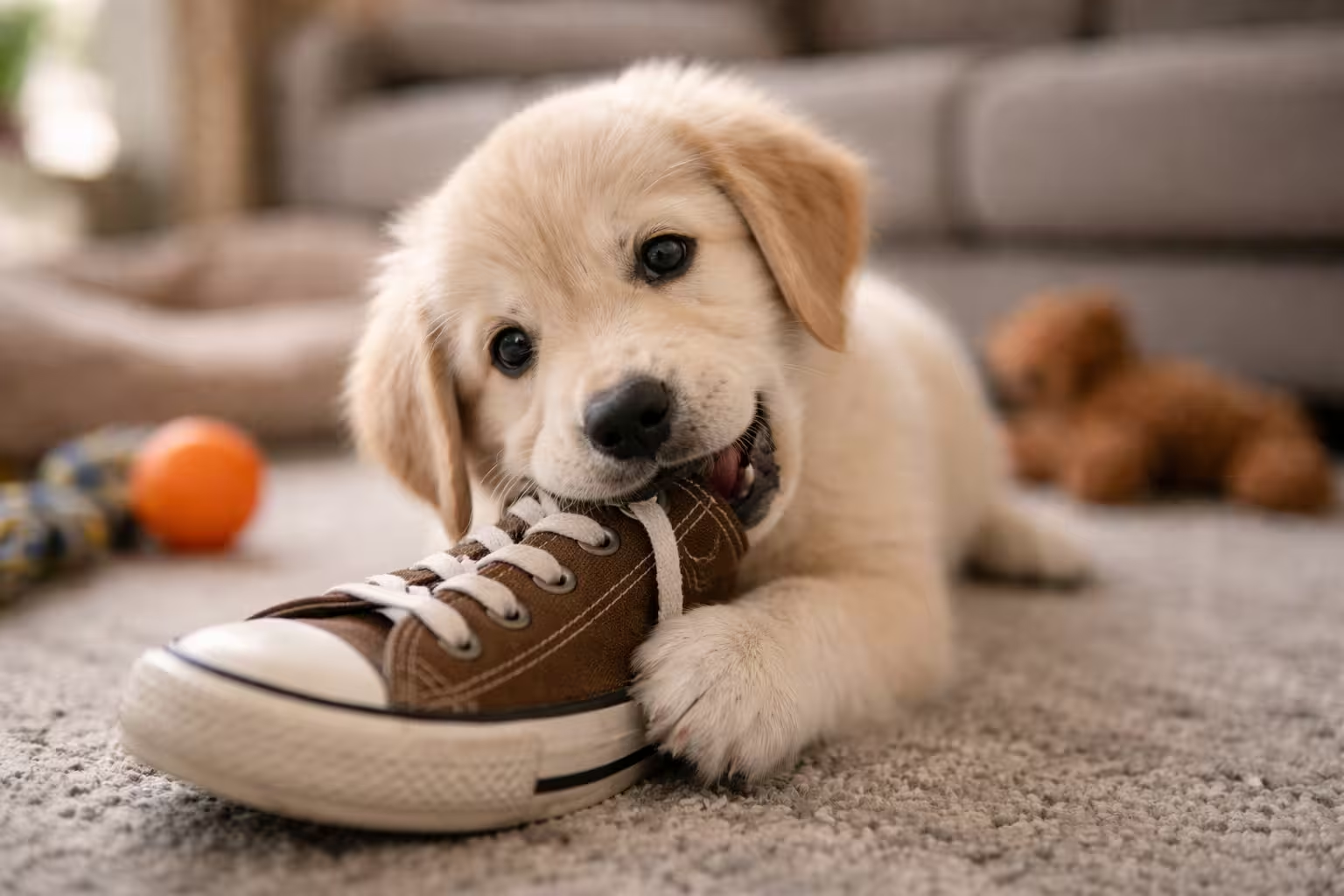
Bringing home a puppy is exciting, chaotic, and occasionally painful—especially when those tiny teeth start finding your hands.
Puppy biting is one of the most common frustrations new dog owners face. What starts as playful nipping can quickly turn into sharp little bites during play, when your puppy gets excited, or sometimes for reasons that seem completely random.
If you’re wondering why your puppy keeps biting—or worrying that something might be wrong—you’re not alone. The good news is that puppy biting is a normal part of development.
Puppies explore the world with their mouths, practice social behavior through play, and learn bite control during their early months. What looks like bad behavior is usually just an immature dog figuring things out.
The key is understanding why it happens and how to guide your puppy toward better habits.
Why Puppies Bite
To solve puppy biting, it helps to understand what’s driving the behavior. In most cases, there isn’t just one reason. Several developmental factors are happening at the same time.
1. Exploration
Puppies experience the world through their mouths.
Just like human babies grab things with their hands, puppies use their teeth to investigate objects, textures, and people. Hands, sleeves, shoelaces, and pant legs all become part of that exploration.
This is why puppy biting hands is so common. Your hands are simply the closest moving objects in the room.
2. Teething
Teething plays a big role in the puppy biting phase.
Between about 3 and 6 months, puppies lose their baby teeth and their adult teeth come in. During this time, their gums can feel sore and irritated.
Chewing helps relieve that pressure.
Unfortunately, puppies don’t always distinguish between appropriate chewing objects and your fingers.
3. Play Behavior
Much of what looks like biting is actually play behavior.
When puppies grow up with littermates, they spend hours wrestling, chasing, and mouthing each other. Through these interactions they begin learning bite inhibition—how hard is too hard.
When your puppy bites during play, they’re often trying to interact the same way they would with another puppy.
4. Lack of Impulse Control
Young puppies are still learning how to regulate excitement.
When play gets intense or stimulation builds up, their ability to control their behavior drops quickly. That’s when puppy biting during play often escalates.
You’ll notice this especially during:
- high-energy play sessions
- zoomies
- evening “witching hours”
- interactions with children
In many cases, biting at this stage is less about aggression and more about overexcitement.
5. Attention Seeking
Sometimes biting simply works.
If your puppy grabs your sleeve and suddenly you react—talking, moving, pushing them away—they’ve successfully started an interaction.
Even negative attention can reinforce the behavior.
When Puppy Biting Is Normal
One of the most reassuring things for new puppy owners to understand is that puppy nipping is developmentally normal.
Most puppies go through a predictable timeline.
Age
Typical Behavior
8–12 weeks
Frequent nipping and mouthing
3–4 months
Peak biting and teething begins
4–6 months
Gradual improvement
6+ months
Much calmer behavior
The most intense puppy biting phase usually happens between 10 weeks and 4 months old.
During this period, it can feel constant. Many owners worry they’re doing something wrong, but in reality their puppy is simply going through a normal stage.
With consistent guidance and a bit of patience, most puppies improve dramatically as they mature.
When Biting Becomes a Problem
While puppy biting is usually normal, there are a few situations where the behavior deserves closer attention.
Possible red flags include:
- Biting that appears defensive or aggressive
- Growling during normal handling
- Guarding food or toys from people
- Bites that escalate in intensity rather than decreasing with redirection
- Stiff body posture or intense staring before biting
These cases are uncommon in young puppies, but if you notice these patterns, working with a qualified trainer can help prevent future issues.
For most owners, however, the challenge isn’t aggression—it’s simply a puppy with sharp teeth and too much enthusiasm.
How to Stop Puppy Biting
Stopping puppy biting isn’t about punishment. It’s about teaching your puppy better ways to interact.
Consistency matters much more than intensity. Small, calm responses repeated over time teach puppies what works and what doesn’t.
1. Redirect the Bite
Redirection is one of the simplest and most effective strategies.
When your puppy grabs your hand, immediately offer an appropriate toy instead.
Over time, your puppy begins to learn:
Hands = boring
Toys = fun
Helpful tip: keep toys in multiple rooms so they’re always nearby when play starts.
2. End the Game When Biting Starts
Puppies quickly learn which behaviors keep play going.
If biting escalates:
- Stop moving
- Stand up
- Disengage from the interaction
The message becomes clear:
Biting makes the fun stop.
This technique is often more effective than verbal corrections.
3. Encourage Calm Play
Some games naturally push puppies toward biting.
Rough wrestling, frantic chasing, or very fast movement can raise excitement levels until the puppy loses control.
Instead, aim for play that stays more structured:
- tug with clear start/stop cues
- fetch
- short training sessions
- puzzle toys
Calmer games help puppies practice better self-control.
4. Reinforce Gentle Behavior
Training works best when puppies understand what does work, not just what doesn’t.
Notice and reward moments when your puppy:
- chooses a toy instead of your hand
- interacts calmly
- disengages from biting
Simple praise or continuing the game reinforces these choices.
5. Manage the Environment
Many biting episodes happen because a puppy is tired, overstimulated, or overwhelmed.
Watch for patterns.
Biting often increases when a puppy is:
- overtired
- playing too long
- surrounded by too much chaos
- interacting with multiple people at once
Sometimes the best solution is simply a quiet break or nap.
Young puppies need far more rest than most owners expect.